How to Roast Coffee Beans at Home
How to Roast Coffee Beans at Home
What do you actually need?
Green coffee beans, a heat source you can control, and somewhere ventilated. A cast iron pan, an air popcorn popper or a dedicated home roaster all work, in increasing order of consistency.
An air popper is the cheapest thing that produces genuinely good results.
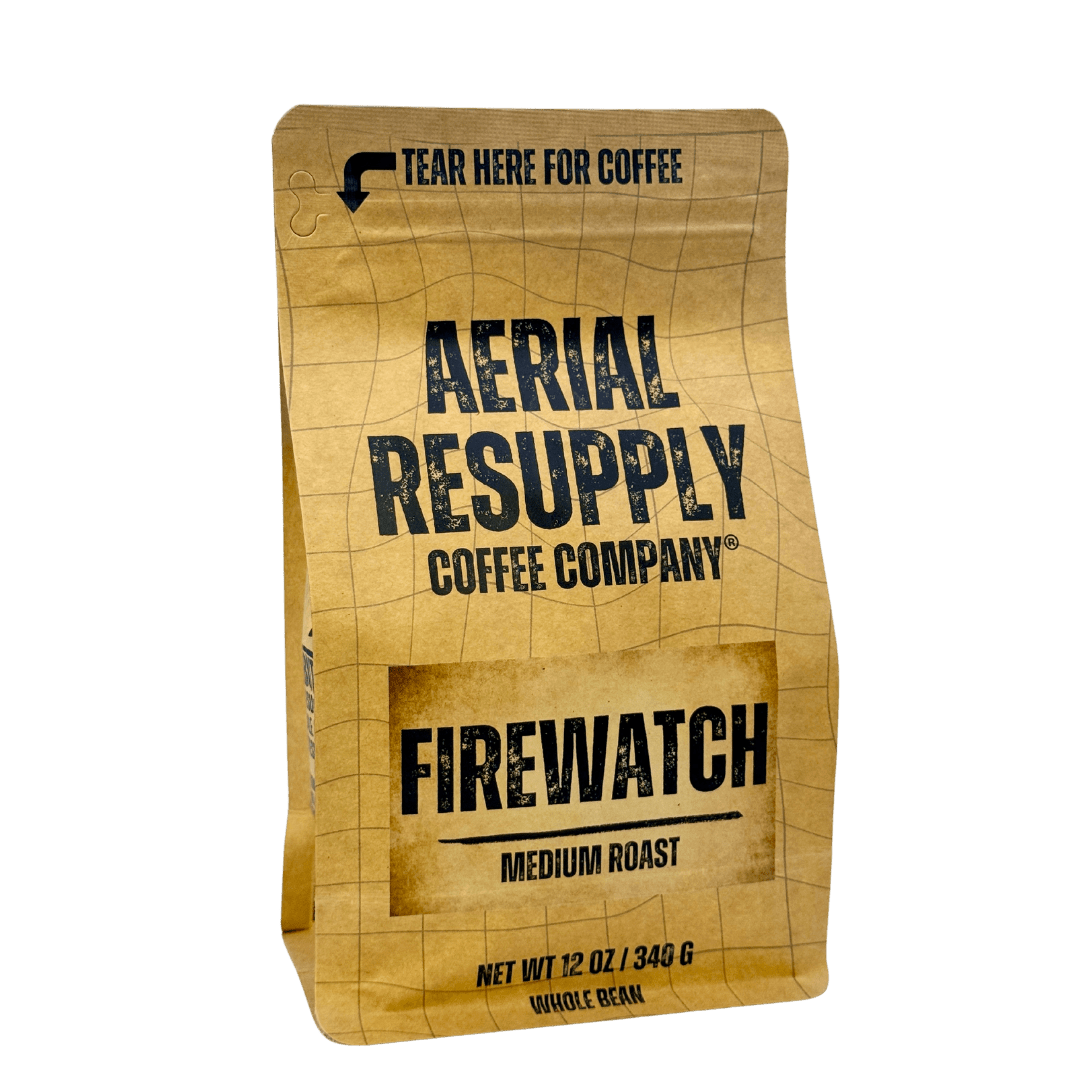
Fire Watch is the Colombian medium roast most people start with, and it works in almost anything you own.
Roast outside or under extraction. It produces a lot of smoke and chaff.
| Stage | Temperature | What you see | Roast level |
|---|---|---|---|
| Drying | Up to 320F | Green to yellow | Not yet coffee |
| Maillard | 320 to 380F | Yellow to brown | Developing |
| First crack | About 385F | Audible cracking | Light |
| Development | 385 to 430F | Deepening brown | Medium |
| Second crack | About 435F | Faster, quieter cracking | Dark |
| Past second | Above 445F | Oily, smoking heavily | Too far |
Every day starts with a mission. Most of them are unglamorous.
Anyone who has done the half of a job nobody claps for already knows this. The work that keeps things running is the work nobody sees.
It is true of a campaign and it is true of a Tuesday.
See the lineup →How do you know when to stop?
Listen. First crack is loud and distinct, like popcorn, and marks the start of light roast. Second crack is quieter and faster, and marks dark roast. Pull between them for medium.
Colour is unreliable in poor light. Sound is not.
Roughly a minute past first crack is a solid medium. Two to three minutes is dark.
Nobody plans to run out. They just do not plan not to.
Then it is 6am, the bag is empty, and the day starts a step behind before anything else has gone wrong.
Readiness is not a feeling. It is whether the thing you need is where you need it.
Browse best sellers →What happens after roasting?
Cool it fast, then rest it. Get the beans down to room temperature within a few minutes, then leave them twelve to twenty-four hours before brewing, and up to seven days for espresso.
Freshly roasted beans release carbon dioxide, which interferes with extraction.
Store in a container that vents, or leave the lid loose for the first day.
Preparation beats luck. That is the entire pitch.
You already apply this everywhere else. Coffee is the easiest place to get it right and the one most people leave to chance.
- Pick the roast that suits how you actually brew.
- Set it to resupply on a schedule that matches what you drink.
- Stop thinking about it. You do not hit zero again.
Is it worth doing?
It is worth trying. You learn what roast level actually means by producing it. Whether you keep doing it depends on whether you enjoy the process, because consistency is genuinely hard.
Commercial roasters control airflow and temperature curves you cannot replicate in a pan.
Most people do it for a few months, learn a lot, and go back to buying roasted.
Mission beats occupation.
Military, first responder, healthcare, trades, teacher, parent, or just someone with a long list. If you wake up with something to accomplish, this is built for you.
Subscriptions take 30% off the first order automatically. No code, nothing to remember. One time orders take 15% with WELCOME15.
Shop the lineup →Questions people actually ask
Can you roast coffee in a frying pan?
Yes. Keep the beans moving constantly over medium heat. It is the least consistent method, since the pan heats unevenly, but it works and it teaches you what to listen for.
What is first crack in coffee roasting?
An audible cracking around 385F as moisture escapes and the bean structure breaks. It marks the start of light roast and is the most important cue in the whole process.
How long does home roasting take?
Eight to fifteen minutes depending on method and target roast level. Air poppers run faster, pans slower.
Do you need to rest coffee after roasting?
Yes. Fresh roasted beans release carbon dioxide which disrupts extraction. Rest twelve to twenty-four hours for filter, and up to seven days for espresso.
Where do you buy green coffee beans?
Specialty importers and many online retailers sell green beans in small quantities. They keep far longer than roasted, often a year or more when stored properly.