
How to Brew Coffee: The Four Things That Decide Every Cup
What ratio should you start with?
Sixty grams of coffee per litre of water, roughly 1:16 by weight. That is about two level tablespoons per six ounce cup. Most people under-dose badly and blame the beans.
Weak and bitter at the same time is the signature of under-dosing.
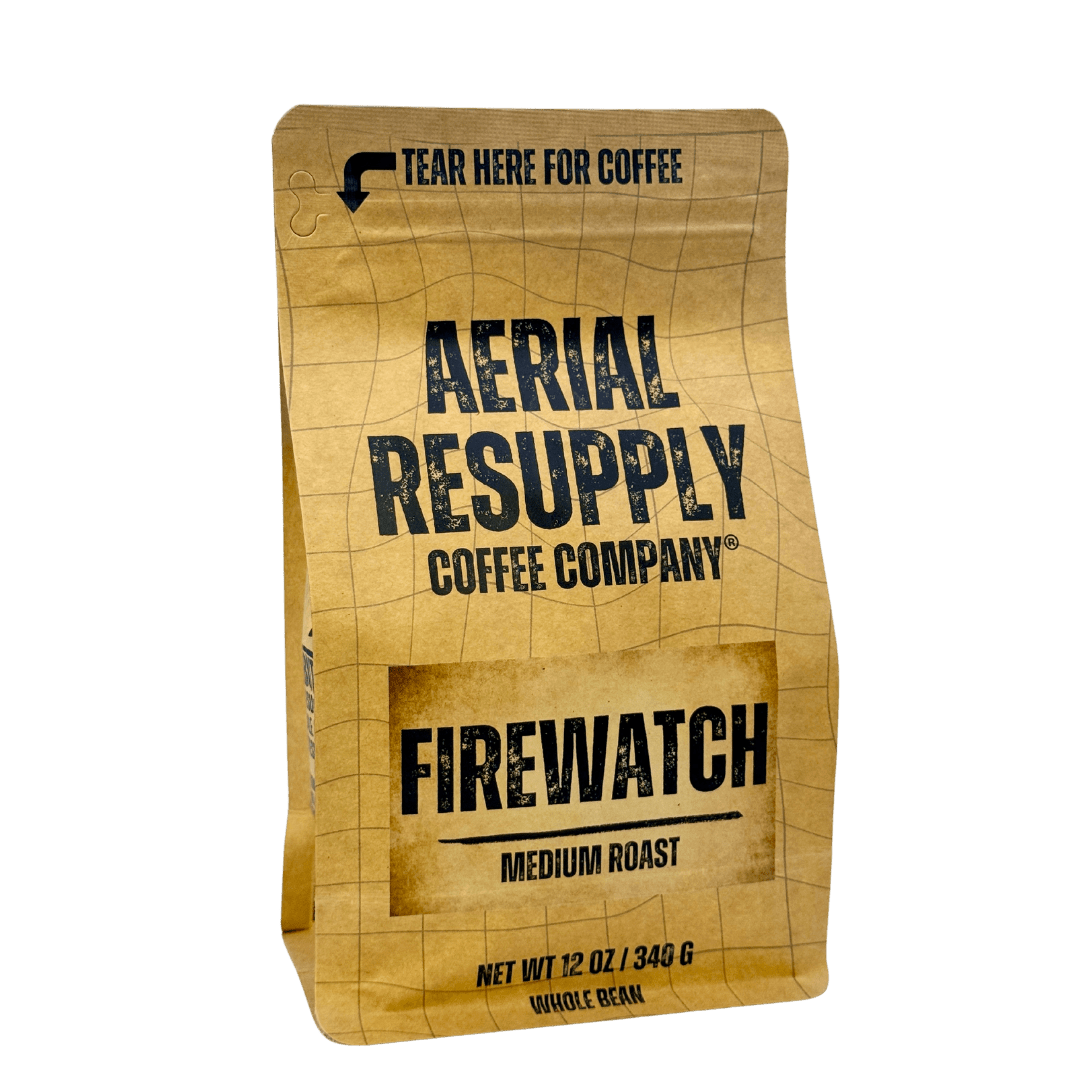
Fire Watch is the Colombian medium roast most people start with, and it works in almost anything you own.
If it tastes weak, add coffee rather than brewing longer.
| Method | Ratio | Grind | Time |
|---|---|---|---|
| Espresso | 1:2 | Very fine | 25 to 30 sec |
| Moka pot | 1:7 | Table salt | 3 to 5 min |
| Pour over | 1:16 | Medium-fine | 2:30 to 3:30 |
| Drip machine | 1:16 | Medium | 4 to 6 min |
| French press | 1:15 | Coarse | 4 min |
| Cold brew | 1:8 | Very coarse | 12 to 16 hrs |
Now you know what it is. Here is whether it is worth making.
Knowing the definition is the easy half. The part that decides whether you like it is what goes in the cup underneath.
A drink built on mediocre coffee tastes like mediocre coffee with extra steps.
See the lineup →How do you pick the right grind?
Match it to contact time. The longer water sits with coffee, the coarser the grind. Espresso is seconds and needs powder. Cold brew is hours and needs the coarsest setting you have.
A burr grinder matters more than the brewer. Blade grinders produce dust and boulders at once.
Adjust grind before you adjust anything else. It changes the cup most.
The ratio is the recipe. The bean is the flavour.
You can follow any of these to the gram and still not enjoy it, because everything downstream of the roast is decoration.
Start with coffee you would drink black, then build on it.
Browse best sellers →Does water temperature really matter?
Yes, considerably. Between 195 and 205 degrees Fahrenheit. Too cool and light roasts turn sour. Too hot and you drag bitterness out of anything dark.
Off boil by about thirty seconds is close enough without a thermometer.
Water is 98% of the cup, so filter it. Not distilled, which lacks the minerals that carry flavour.
One bag you know how to use beats five you do not.
Learn one roast properly. Then make sure you never open the cupboard and find it empty.
- Pick the roast that suits how you actually brew.
- Set it to resupply on a schedule that matches what you drink.
- Stop thinking about it. You do not hit zero again.
How do you fix a bad cup?
Diagnose by taste. Sour means under-extracted, so grind finer or brew longer. Bitter means over-extracted, so grind coarser or brew shorter. Weak means add coffee.
Change one thing at a time and change it meaningfully. Small tweaks are impossible to judge.
Keep the same ratio for a week and you will learn more than from constant fiddling.
Brew it. Get after it.
Whatever tomorrow asks of you, it goes better on a cup that was worth the effort.
Subscriptions take 30% off the first order automatically. No code, nothing to remember. One time orders take 15% with WELCOME15.
Shop the lineup →Questions people actually ask
What is the best coffee to water ratio?
Around 1:16 by weight for filter methods, which is 60 grams of coffee per litre. Espresso runs about 1:2, cold brew concentrate about 1:8.
What temperature should water be for coffee?
Between 195 and 205 degrees Fahrenheit. Taking a kettle off the boil and waiting about thirty seconds gets you there without a thermometer.
Why does my coffee taste sour?
Under-extraction. The grind is too coarse, the water too cool, or the brew too short. Grind finer first, then check your water temperature.
Why does my coffee taste bitter?
Over-extraction, usually from too fine a grind or too long a brew. It can also come from a carafe sitting on a hot plate, which keeps cooking the coffee.
Do I need a scale to make good coffee?
It helps more than any other cheap purchase. Bean density varies with roast, so scoops are unreliable. A basic scale removes the largest source of inconsistency.