Coffee vs Latte: What You Drink Says More Than You Think

In the civilian world, coffee vs. latte is a preference. In the military, it's a personality assessment. The guy who takes his black doesn't need to say anything — he already did. The guy with the caramel macchiato is going to have a harder morning than he planned. This isn't judgment. It's field observation. And whether you're team black coffee or team "I need some milk in this," we're going to break down what's actually in your cup — and which ARC roast belongs in it.
People land on this page because they want to know the actual difference between coffee and a latte. Fair enough. We'll cover that completely. But we're also going to do it like veterans, because that's who we are at Aerial Resupply Coffee — and because the coffee vs. latte debate has a cultural dimension most coffee sites completely ignore.
☕ What Is Coffee? (The Basics)
Coffee is a brewed drink made from roasted coffee beans — the seeds of berries from the Coffea plant. That's it. Hot water, ground beans, extraction. The preparation method determines the final flavor, strength, and character of what ends up in the cup.
The most common types you'll encounter: drip coffee is made by running hot water through grounds — what's in most office pots and FOB chow halls. Espresso is the concentrated version, made by forcing pressurized hot water through finely-ground beans — the foundation of most café drinks. Americano is espresso diluted with hot water, which gives you drip-coffee strength with a different flavor profile. Cold brew is coarse grounds steeped in cold water for 12–24 hours — lower acidity, higher caffeine, zero heat required.
Black coffee is just any of the above without milk, cream, or sugar. Simple. Unambiguous. What most veterans defaulted to the first time they ran out of creamer downrange and never looked back.
🥛 What Is a Latte?
A latte — short for caffè latte, Italian for "coffee and milk" — is espresso combined with steamed milk and a thin layer of milk foam on top. Typically one or two shots of espresso, and the rest is milk. The result is a smoother, creamier, naturally sweeter drink than black coffee, with the espresso flavor present but softened.
Born in Italian café culture and perfected in American coffee shops, the latte became the entry point for millions of people who wanted the caffeine hit without the full intensity of straight espresso or black drip. It's not a weak drink — a well-made latte with quality espresso has real depth. It's just a different experience than drinking it straight.
Common variations include the vanilla latte (syrup added), iced latte (espresso over cold milk and ice), mocha latte (chocolate syrup), and the caramel latte (for the person who wants dessert but feels better calling it coffee). All valid. We're not here to court-martial anyone's order.
⚔️ Coffee vs. Latte: The Real Differences
Here's the side-by-side that actually answers the question:
| Category | Black Coffee | Latte |
|---|---|---|
| Base | Brewed coffee (drip, pour-over, French press) or espresso | Espresso only |
| Added ingredients | None (that's the point) | Steamed milk + milk foam |
| Flavor | Bold, direct, roast-forward — you taste exactly what you brewed | Smooth, creamy, naturally sweeter — espresso softened by milk |
| Caffeine | Higher per cup (drip coffee: ~95mg per 8oz) | Lower per drink (one shot espresso: ~63mg) |
| Calories | ~5 calories (black) | ~120–250 calories (milk + any syrups) |
| Prep complexity | Low — brew and drink | Higher — espresso machine + steamed milk required |
| Field-expedient? | Yes. Instant, French press, drip — anything works. | Not without equipment. Good luck frothing milk in a Humvee. |
The caffeine difference is worth knowing: a single shot of espresso has about 63mg of caffeine. An 8oz drip coffee has around 95mg. So counter to what most people assume, a standard latte often has less caffeine than a regular cup of drip — unless you're ordering doubles. If maximum caffeine is the mission objective, black drip or double espresso wins.
🎖️ The Military Coffee Culture Breakdown
Here's the part other coffee sites skip. In the military, how you take your coffee is information. It gets noticed. It gets commented on. And while nobody's getting formally evaluated on their coffee order, the informal assessment is very much happening.
The black coffee drinker has either developed a genuine taste preference over years of drinking whatever was available, or decided somewhere along the way that adding things to coffee is a logistical complication they don't need. Possibly both. They are not superior. They just want you to think they are.
The "little bit of cream, no sugar" person is the most common species. They've made their peace with coffee. They are not performing anything. They are simply hydrating with caffeine. Respect.
The latte/cappuccino crowd tends to emerge as service members accumulate time near actual espresso machines — overseas liberty ports, Germany, Italy, the Pentagon. Once you've had a properly pulled espresso drink, the 100-cup urn in the breakroom hits differently. There is no moral failure here.
The person who orders anything caramel at a coffee shop during a work trip is going to get absolutely destroyed by their peers and they know it and they ordered it anyway. That's actually a form of confidence.
"Coffee is fuel. How you take it is a personality test you didn't know you were taking." — Observed in every unit break room in every branch, forever.
🔬 Espresso: The Engine Under Both Hoods
Whether you're drinking black coffee or a latte, understanding espresso matters — because espresso is the foundation of nearly every café coffee drink, and the roast level you choose determines everything about the flavor in the cup.
Light roasts are more acidic with fruity, bright notes. Higher caffeine by weight (less roast time = more caffeine preserved), but the flavor can be polarizing. Medium roasts hit the balance point — rounded, approachable, with sweetness and depth. Dark roasts bring the bold, low-acid, chocolate-and-smoke profile that holds up best in milk-based drinks. If you're making a latte at home, dark roast espresso is the right call — the milk needs something strong enough to stand up to it.
For a latte, you want an espresso that won't disappear into the milk. That means bold, well-extracted, and roasted with intention — not just dark for the sake of dark, but dark because the beans can handle it.

🔴 If You Drink It Black
You want the roast to do the work
Black coffee drinkers taste everything — which means the roast matters more than anything else. You're not hiding behind milk. You're drinking the coffee. Here's where to start:
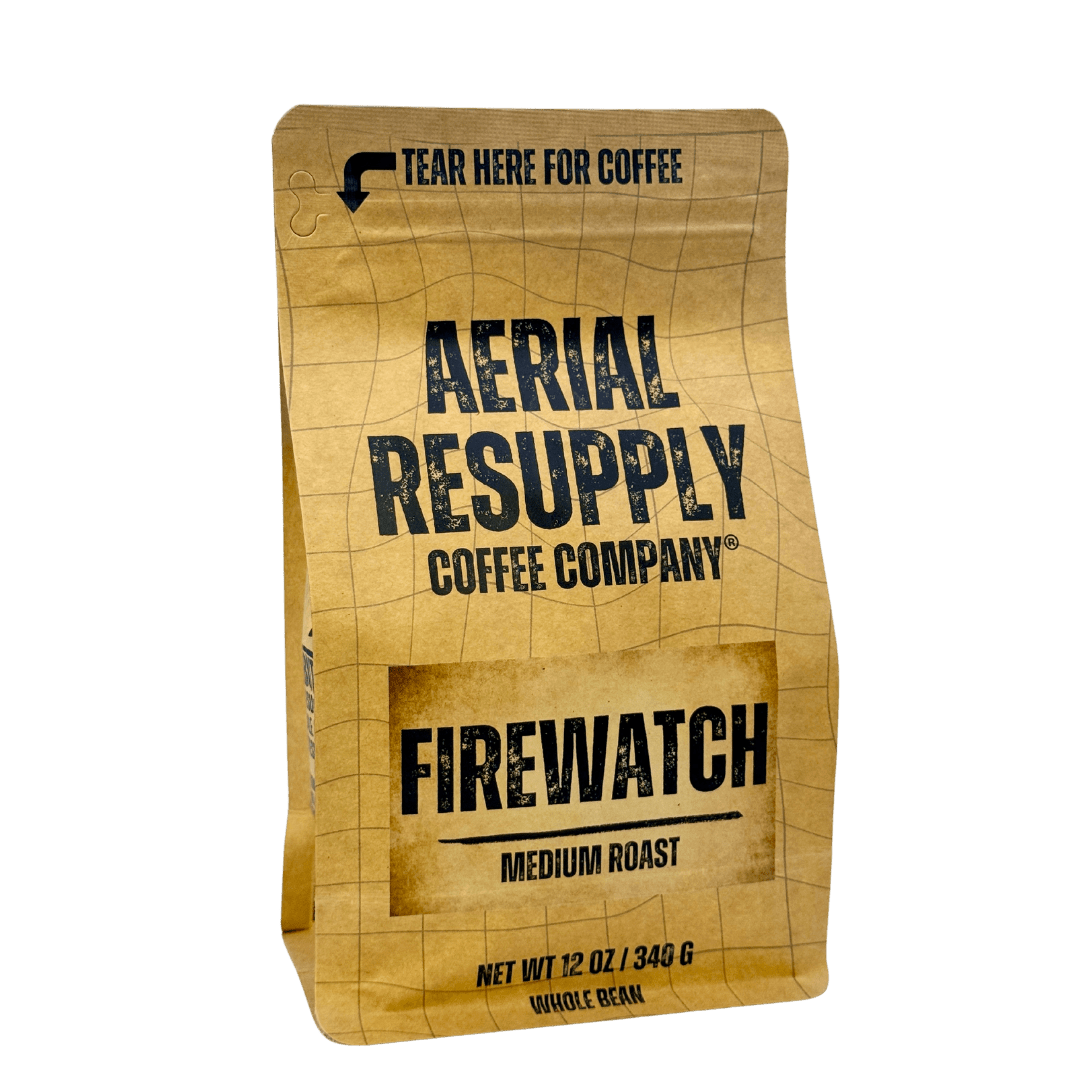
FireWatch Medium Roast — Colombian Supremo, medium roast. Chocolate and warm spice. Balanced, reliable, drinks clean from the first cup to the bottom of the pot. The daily driver for people who take their coffee seriously without making it a whole thing.
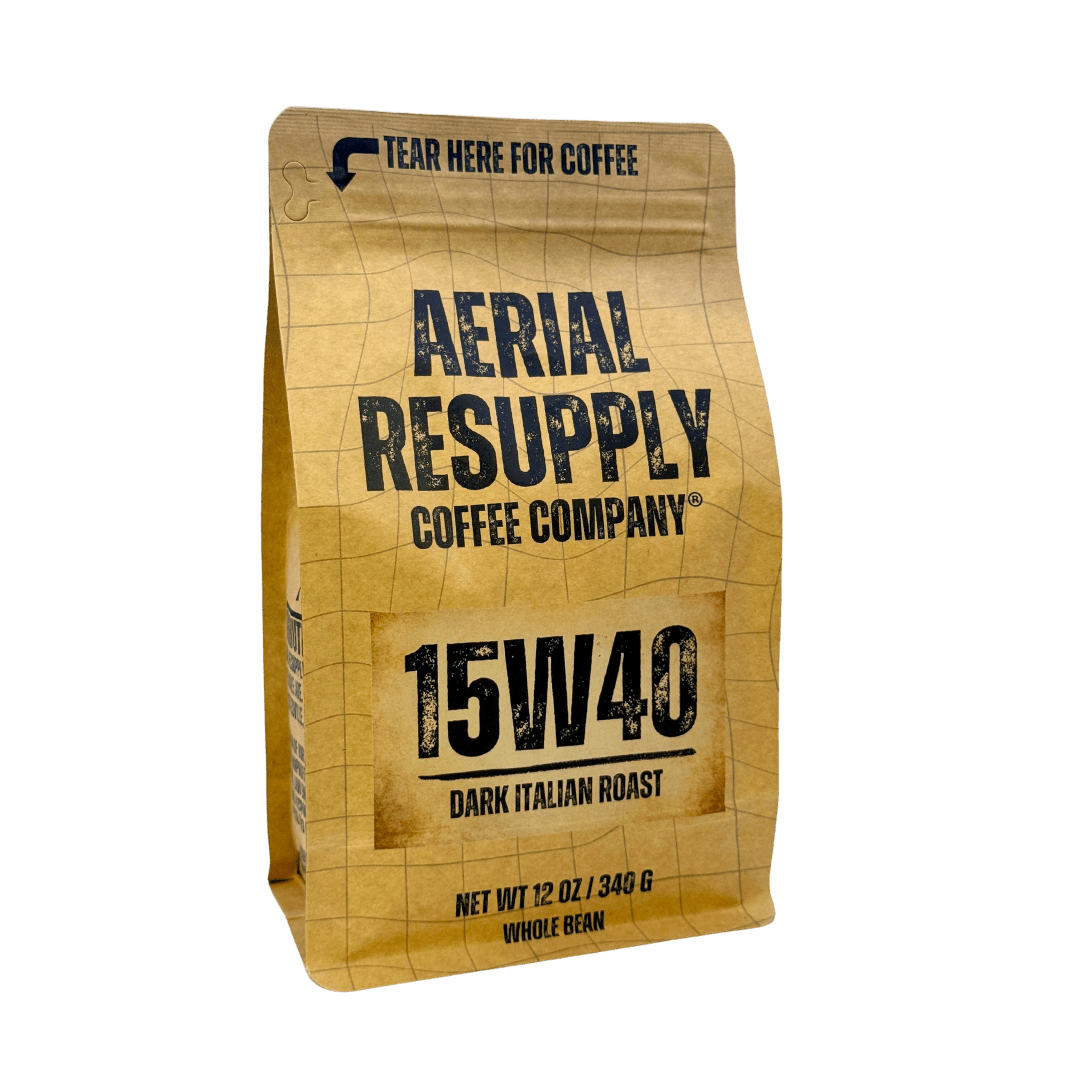
15W40 Dark Roast — Dark Italian roast. Bold, low-acid, built for long watches. Named after motor oil for a reason: this is the one you run when conditions are rough and you need something that doesn't quit.
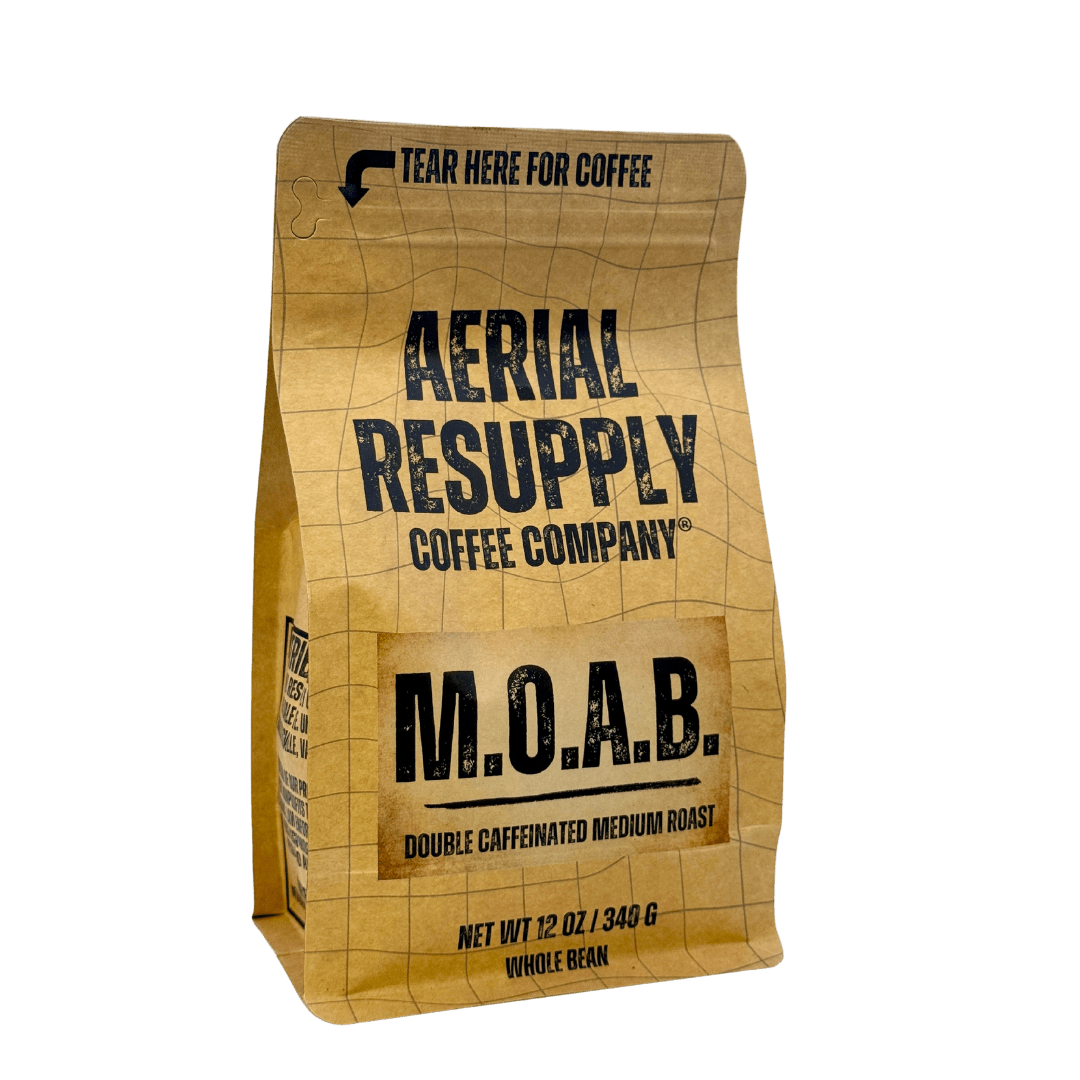
MOAB — Double Caffeinated Robusta — When regular coffee isn't enough and you have no intention of slowing down. Double the caffeine. Not subtle. Not trying to be.
Shop Black Coffee Roasts →🔵 If You're Making Lattes at Home
You need an espresso roast that survives the milk
A latte lives or dies on the espresso underneath it. Weak espresso disappears into the milk and you're left with warm brown water. You need something dark, bold, and intentionally roasted for extraction.
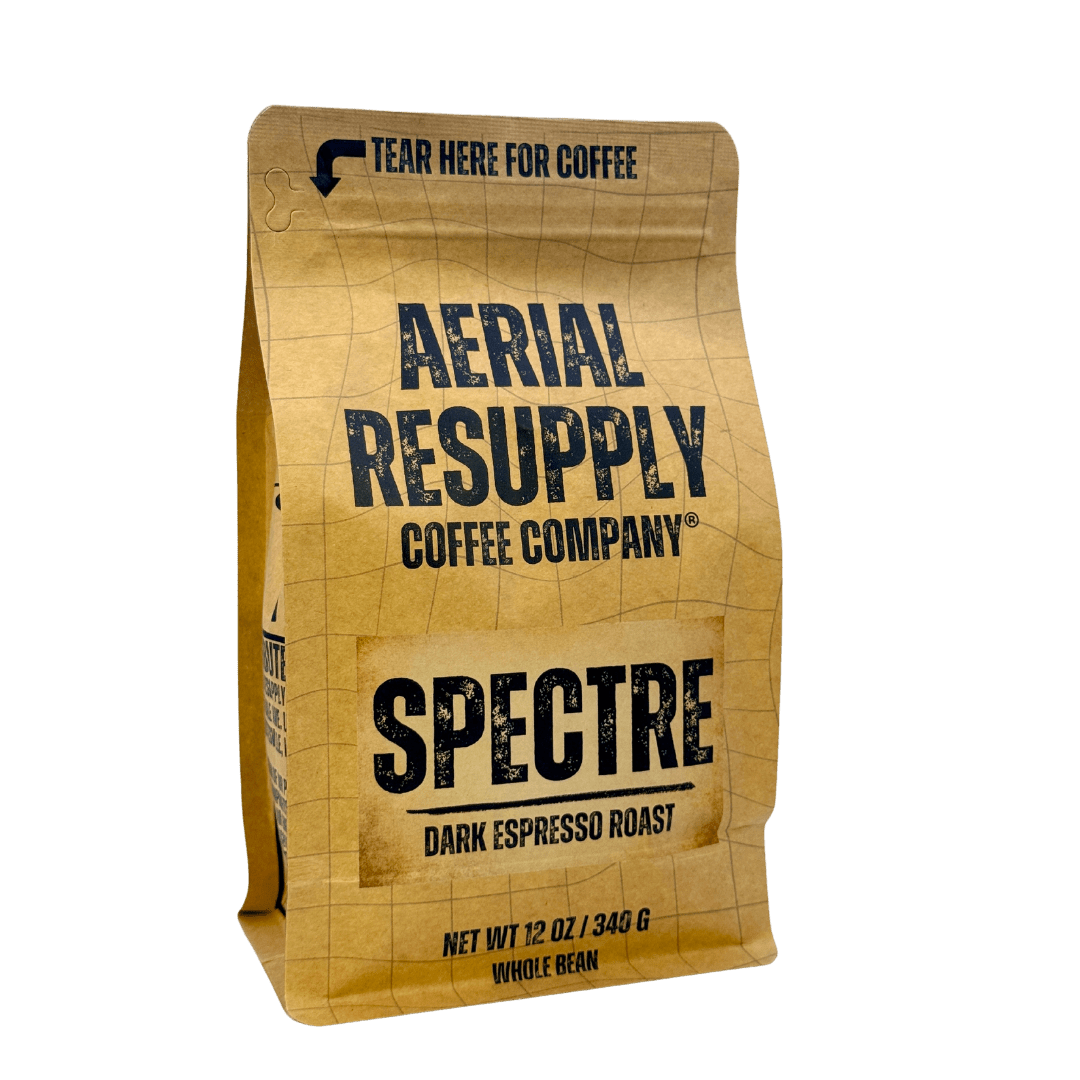
Spectre Dark Espresso Roast — Built specifically for espresso. Rich, smooth, with chocolate and dark fruit notes that hold their own against steamed milk. Pull a double shot, add your half-and-half, and it actually tastes like something.
15W40 Dark Roast — Works just as well for espresso drinks as it does black. The low-acid profile means it plays well with milk without turning bitter.
Shop Espresso Roasts →❓ Coffee vs. Latte: FAQ
What is the main difference between coffee and a latte?
Coffee is brewed from grounds and water — nothing else. A latte is espresso plus steamed milk plus foam. The latte is a milk-based espresso drink; coffee is just coffee. The preparation, ingredients, flavor, and caloric content are all different.
Which has more caffeine — coffee or a latte?
Black drip coffee typically has more caffeine than a single-shot latte. An 8oz drip coffee has around 95mg; one espresso shot is about 63mg. If you want maximum caffeine from a latte, order a double shot — that gets you to ~126mg. Or skip the milk entirely and drink drip. Or just get MOAB.
Is a latte less strong than coffee?
In terms of flavor intensity, yes. The milk softens the espresso. In terms of caffeine per drink, a standard latte (one shot) is also lower than a standard cup of drip. But "strength" is subjective — a well-pulled double espresso latte is not a weak drink.
Can I make a latte at home without an espresso machine?
Yes. Use a French press or Moka pot to brew a strong, concentrated coffee. Heat your milk separately and froth it with a handheld frother or a whisk. It won't be identical to a café pull, but with a quality dark roast it'll be close enough to matter. Use Spectre or 15W40 for the best result.
Which is better for you — coffee or a latte?
Black coffee has negligible calories, is high in antioxidants, and won't add anything to your waistline. A latte has more calories from the milk (around 120–150 for a standard 12oz with whole milk, more with syrups). Neither is unhealthy in normal quantities. The latte becomes a problem when it's a caramel vanilla triple syrup situation with whipped cream — at that point it's dessert, not coffee, and you should own that honestly.
What type of milk is best for a latte?
Whole milk steams the best and produces the richest foam — it's the standard for a reason. 2% works. Oat milk steams surprisingly well and has become a legitimate option. Skim milk produces weak foam and a thin drink. Heavy cream is too rich to steam properly. Half-and-half, if you're making a breve, is in its own category.
Bottom Line
Coffee vs. latte isn't a competition — it's a spectrum. Black coffee is direct, efficient, and unambiguous. A latte is considered, crafted, and built for a different kind of moment. Both are valid. Both can be excellent. Both can be terrible if the beans behind them are garbage.
At Aerial Resupply Coffee, we roast for both ends of that spectrum — because we've had both kinds of mornings, and we know the difference a good bean makes whether it's going in black or under a layer of steamed milk. Veteran-owned, mission-built, no filler.