
950,000 Gallons of Coffee and What It Takes to Move It
Why is coffee a logistics problem at all?
Because volume multiplies everything. Every cup requires water, packaging, transport, storage and disposal. At the scale of a deployed force, small per-unit quantities become enormous aggregate ones.
A single cup is trivial. A hundred thousand cups a day is a supply line.
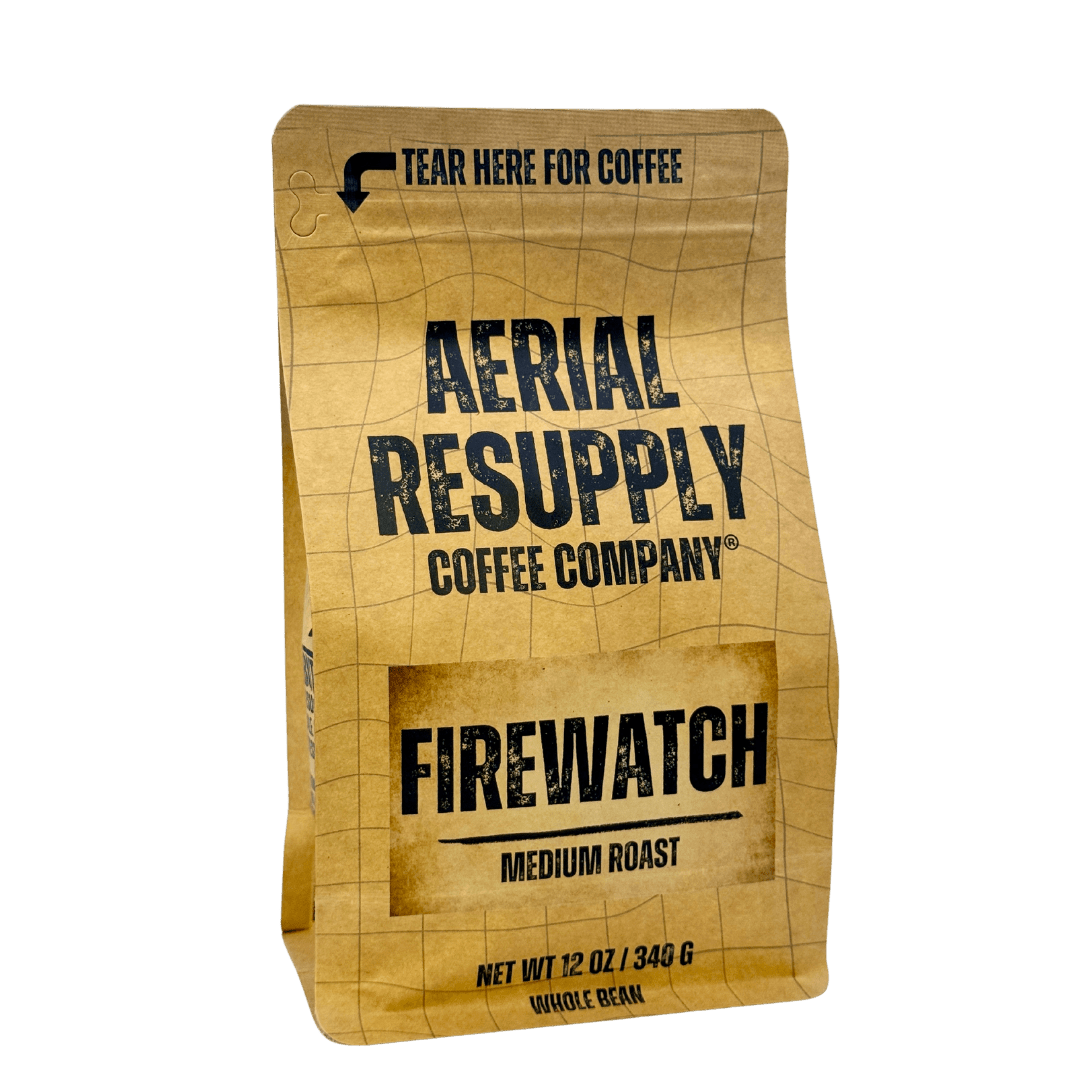
Fire Watch is the Colombian medium roast most people start with, and it works in almost anything you own.
That scaling effect is the whole reason logistics is a profession rather than an errand.
| What scales | Per cup | At scale |
|---|---|---|
| Water | 8 oz | Thousands of gallons daily |
| Coffee | About 10 g | Tonnes per month |
| Packaging | 1 sachet or filter | Pallets |
| Transport | Negligible | Dedicated capacity |
| Waste | 1 cup | Continuous disposal requirement |
Every day starts with a mission. Most of them are unglamorous.
Anyone who has done the half of a job nobody claps for already knows this. The work that keeps things running is the work nobody sees.
It is true of a campaign and it is true of a Tuesday.
See the lineup →Why is instant used so heavily?
Weight and shelf life. Instant coffee weighs a fraction of ground and keeps for years. In a system where everything has to be carried and stored, those two properties outrank flavour completely.
The 2026 ration update added caffeinated chews, gels and gums, which push the same logic further.
Lighter and smaller wins every argument in the field. It usually loses at home.
Nobody plans to run out. They just do not plan not to.
Then it is 6am, the bag is empty, and the day starts a step behind before anything else has gone wrong.
Readiness is not a feeling. It is whether the thing you need is where you need it.
Browse best sellers →What does this illustrate more generally?
That sustainment decides what is possible. Plans assume material will arrive. Whether it arrives is a separate discipline, and it is the one that quietly sets the ceiling on everything else.
Amateurs talk strategy, professionals talk logistics. The line survives because it keeps being true.
Modern militaries are investing heavily in predictive resupply and autonomous delivery for exactly this reason.
Preparation beats luck. That is the entire pitch.
You already apply this everywhere else. Coffee is the easiest place to get it right and the one most people leave to chance.
- Pick the roast that suits how you actually brew.
- Set it to resupply on a schedule that matches what you drink.
- Stop thinking about it. You do not hit zero again.
Does the same principle apply outside the military?
Directly. Any business that has run out of stock, missed a shipment, or promised something it could not deliver has learned this in a smaller room with lower stakes.
The domestic version is standing in a kitchen at 6am in front of an empty bag.
Nobody plans to run out. They just do not plan not to.
Mission beats occupation.
Military, first responder, healthcare, trades, teacher, parent, or just someone with a long list. If you wake up with something to accomplish, this is built for you.
Subscriptions take 30% off the first order automatically. No code, nothing to remember. One time orders take 15% with WELCOME15.
Shop the lineup →Questions people actually ask
Why does the military use instant coffee?
Weight and shelf life. Instant weighs a fraction of ground coffee and keeps for years, which matters more than flavour when everything has to be transported and stored.
How much coffee does a deployed force consume?
It varies enormously by size and mission, but research puts individual caffeine intake at 212 to 285mg daily, with coffee as the primary source. Multiply that across a force and it becomes a supply line.
What is contested logistics?
Supplying a force when the supply route itself is under threat. It is driving current military investment in autonomous resupply and predictive supply chain tools.
Why is logistics called the constraint?
Because plans assume material arrives. Strategy decides what to attempt, logistics decides what is achievable, and the second one sets the actual ceiling.
What replaced the First Strike Ration?
The Close Combat Assault Ration, which is 17% lighter and 39% smaller and became fully available for procurement in late 2025.