What Coffee Does the Military Use? (And Why Most of it is Bad)


Aerial Resupply Coffee 15W40 Dark Italian Roast bag and steaming mug on a military workbench with a flight helmet and rucksack

In the world of military logistics, "beans and bullets" are the two most critical pillars of operational success. While bullets win the skirmish, it is the beans—specifically the coffee beans—that win the war. Throughout American history, coffee has been more than a beverage; it has been a tactical necessity, a psychological anchor, and a universal language spoken from the foxhole to the flight deck.

However, if you ask a veteran, "What coffee does the military use?" you will likely get a grimace before an answer. To understand the complex relationship between the Armed Forces and their caffeine, we have to look at the massive machinery of the Defense Logistics Agency, the survivalist hacks of the infantry, and the modern revolution led by veteran-owned coffee companies like Aerial Resupply Coffee.

A Historical Necessity: Why Coffee Built the US Military

The US Military’s obsession with coffee didn't start with a morning Starbucks run. It began as a patriotic act of rebellion. Following the Boston Tea Party, coffee became the drink of the American revolutionary. By 1832, President Andrew Jackson officially replaced the daily liquor ration with coffee and sugar, recognizing that a caffeinated soldier was more disciplined than a drunken one.

Historical reenactment of Union soldiers brewing coffee over a campfire during the American Civil War representing the origin of military coffee rations

The Civil War: The First "Coffee Boilers"

During the Civil War, coffee was so essential that it was often the first thing Union soldiers prepared after a long march. Men known as "coffee boilers" would rush to start fires as soon as the unit halted. Union soldiers were issued roughly 36 pounds of coffee per year—more than almost any other army in history at that time. It was the "fuel of the Union," providing the endurance needed for the brutal campaigns of the 1860s.

World War II: The Birth of "G.I. Joe"

By World War II, the term "Cup of Joe" became cemented in the American lexicon. Some historians believe "Joe" was a shortening of "G.I. Joe," linking the beverage directly to the identity of the American soldier. Coffee was included in every ration type—C-rations, K-rations, and D-rations. It provided a sense of normalcy in the chaos of the European and Pacific theaters.

The Supply Chain: Who Holds the Contracts Today?

Today, the Defense Logistics Agency (DLA) manages the subsistence contracts that fuel millions of service members. When you are buying coffee for an entire Navy carrier strike group, you are looking for volume, shelf-life, and cost-efficiency—rarely for flavor.

The "Standard Issue" Giants: Maxwell House and S&D

In Dining Facilities (DFACs) and galleys worldwide, the primary coffee suppliers are massive commercial entities. Maxwell House and S&D Coffee & Tea are common sights. These brands provide a "functional" blend designed to withstand years in a shipping container. While these brands meet the logistical requirement for caffeine, they are often referred to as "Battery Acid" by troops because of their high acidity and burnt, bitter finish.

The Tactical Oasis: Green Beans Coffee

On major Forward Operating Bases (FOBs) during the War on Terror, Green Beans Coffee became a legendary staple. Their containers offered a taste of home, providing espresso-based drinks that were a far cry from the sludge in the DFAC. Their "Cup of Joe for a Joe" program allowed civilians to buy a cup for a deployed soldier, making it a powerful morale tool.

The "Ranger Mocha" and Field Survival

When soldiers move "outside the wire," they lose access to brewed coffee. This is where the Meal, Ready-to-Eat (MRE) takes over. Every MRE contains a small packet of instant coffee. On its own, it’s a struggle to consume. However, soldiers are masters of improvisation.

The "Ranger Mocha" is a field-expedient delicacy. By mixing the instant coffee packet with the MRE cocoa powder and a splash of water, troops create a high-octane sludge that provides a massive sugar and caffeine hit. It isn't pretty, and it doesn't taste like premium dark roast coffee, but it keeps a machine gunner awake at 03:00.

A military veteran in multicam pants sitting on a truck tailgate at sunset drinking 15W40 Dark Roast by Aerial Resupply Coffee

The Premium Resupply: The Veteran-Owned Revolution

In the last decade, service members have started taking their coffee into their own hands. Tired of the "standard issue" junk, they began seeking out brands that shared their values. Aerial Resupply Coffee was born from this exact need.

Founded by Mike Klemmer, a retired US Army Logistics Officer, Aerial Resupply Coffee treats coffee like a mission-critical resupply. We don't just roast beans; we provide Logistics and Morale. Our roasts are named after the roles and equipment that define the military experience:

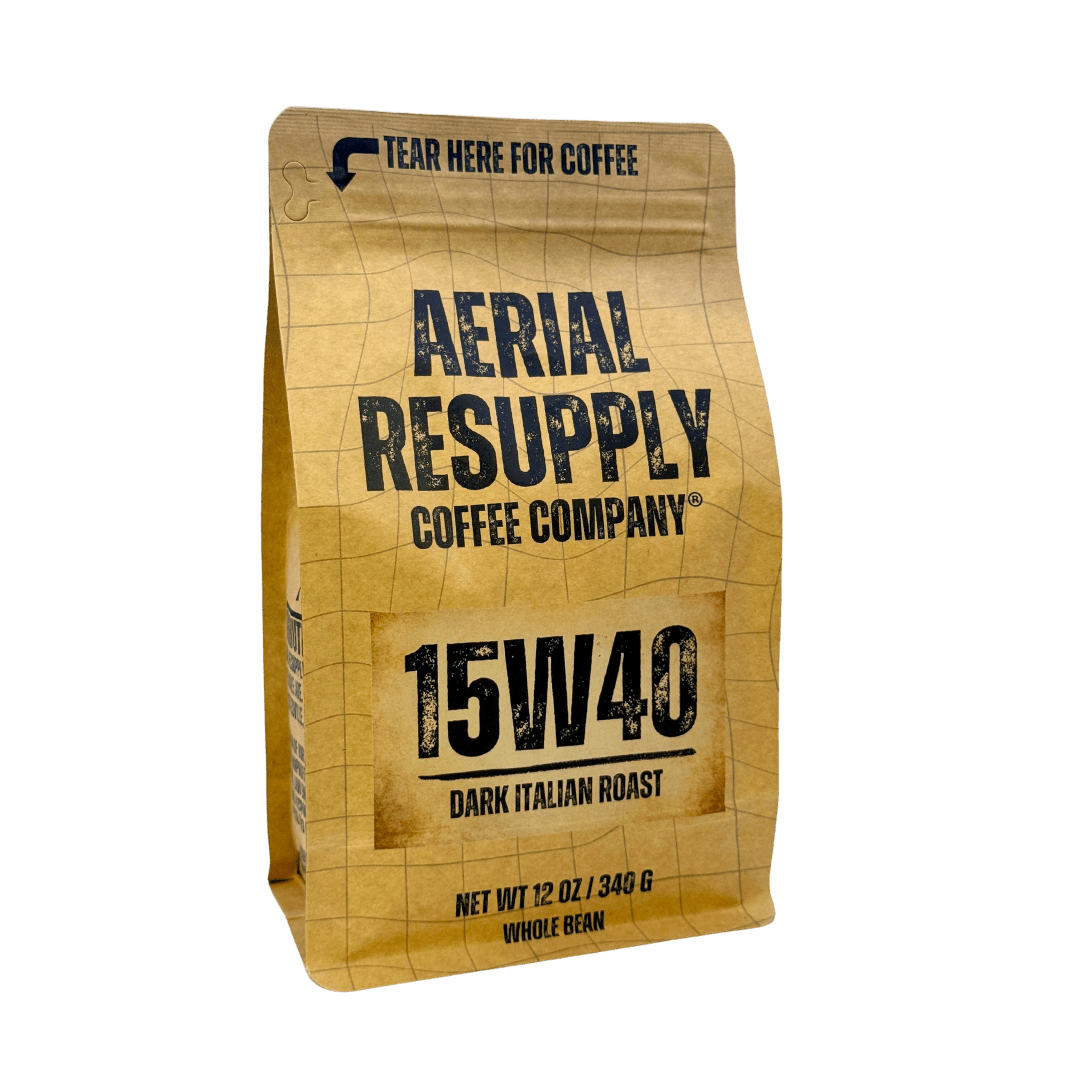
  • 15W40 Dark Italian Roast: This is a tribute to the maintainers and the motor pool—the people who keep the military's heavy machinery moving. It is a bold, oily dark roast that never tastes burnt.
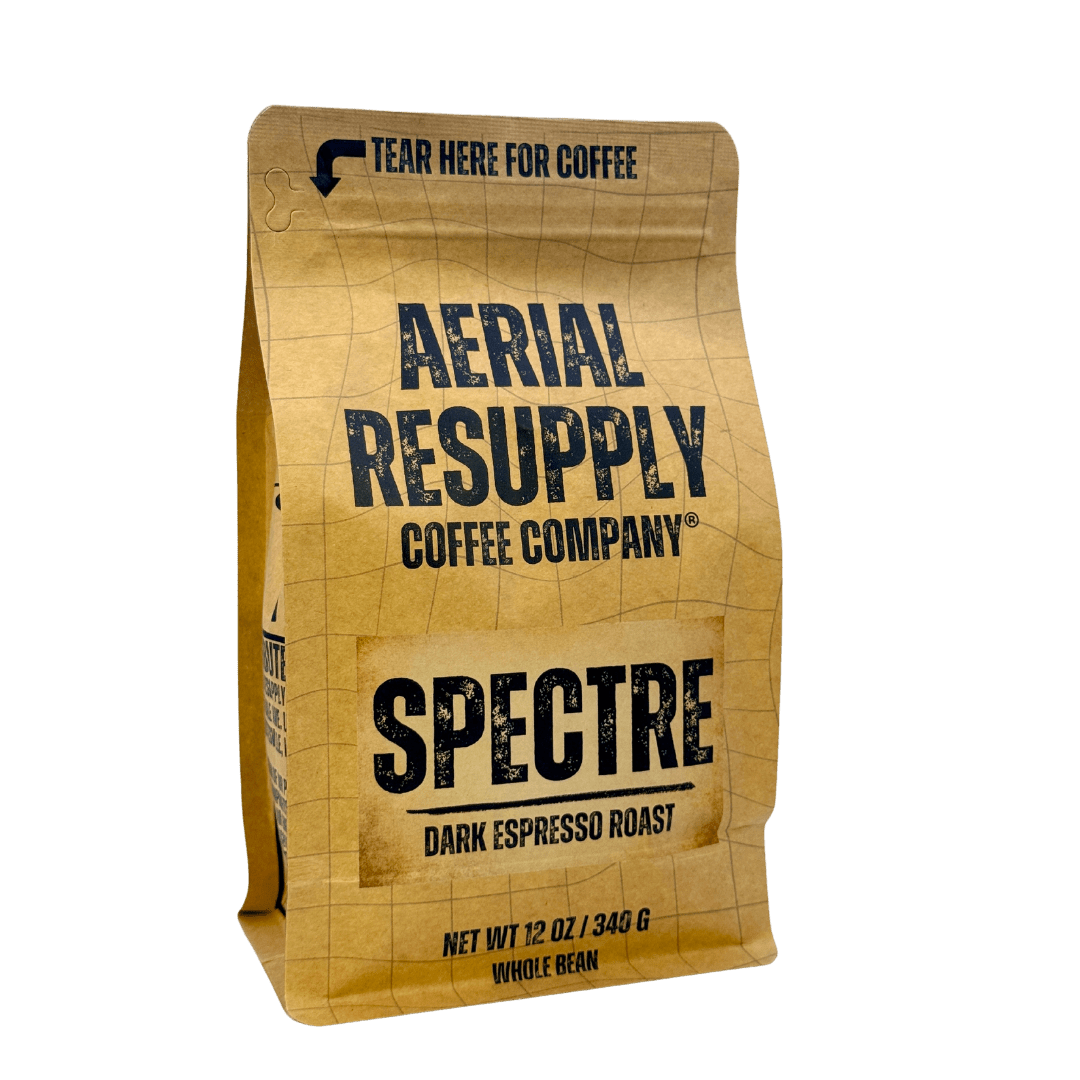
  • Spectre Dark Espresso Roast: Perfect for the aviation community and those working the graveyard shift. It’s smooth enough for sipping but strong enough to fuel a flight line.
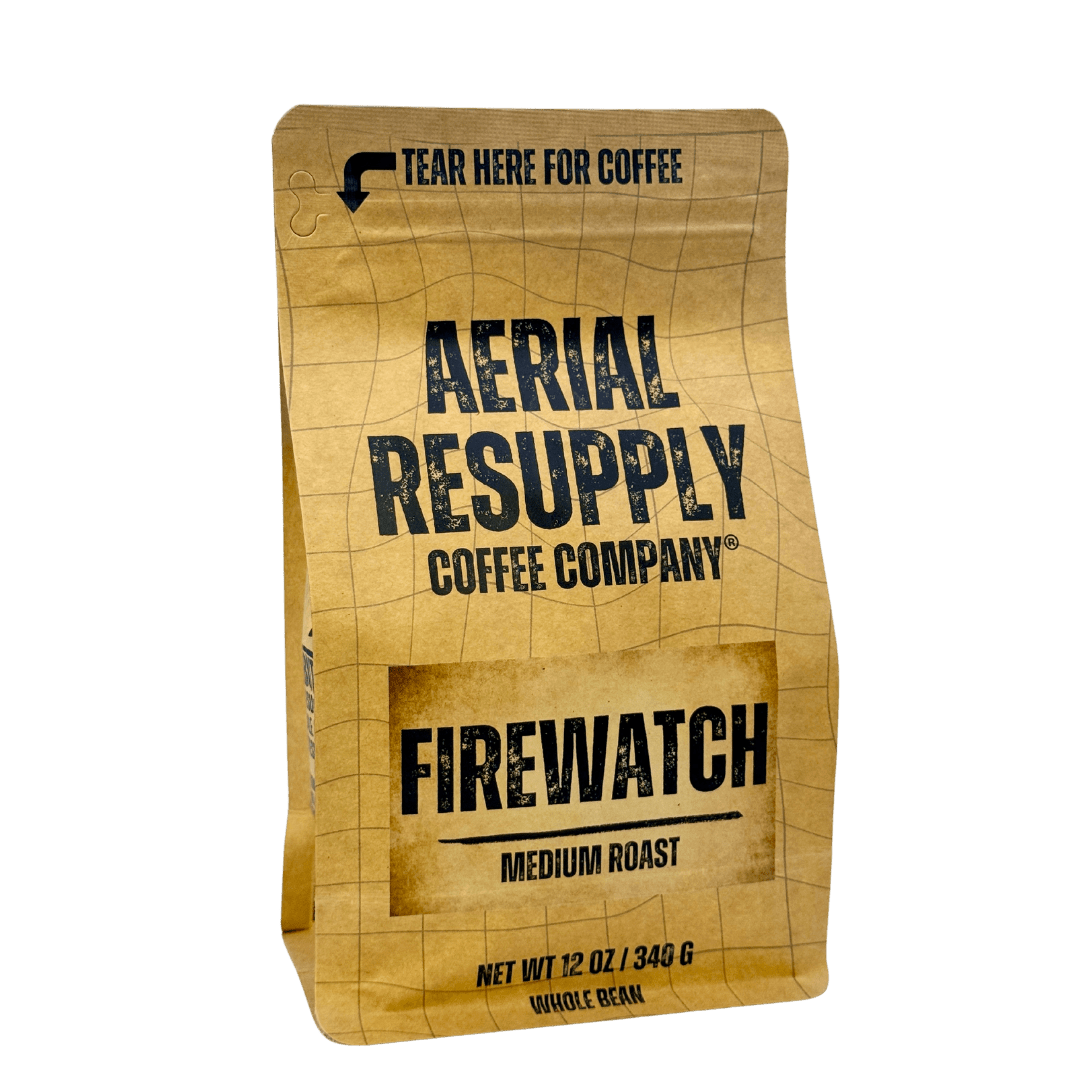
  • Fire Watch Colombian Medium Roast: Guard duty is a thankless task, but it’s easier with a balanced, high-quality Colombian brew.
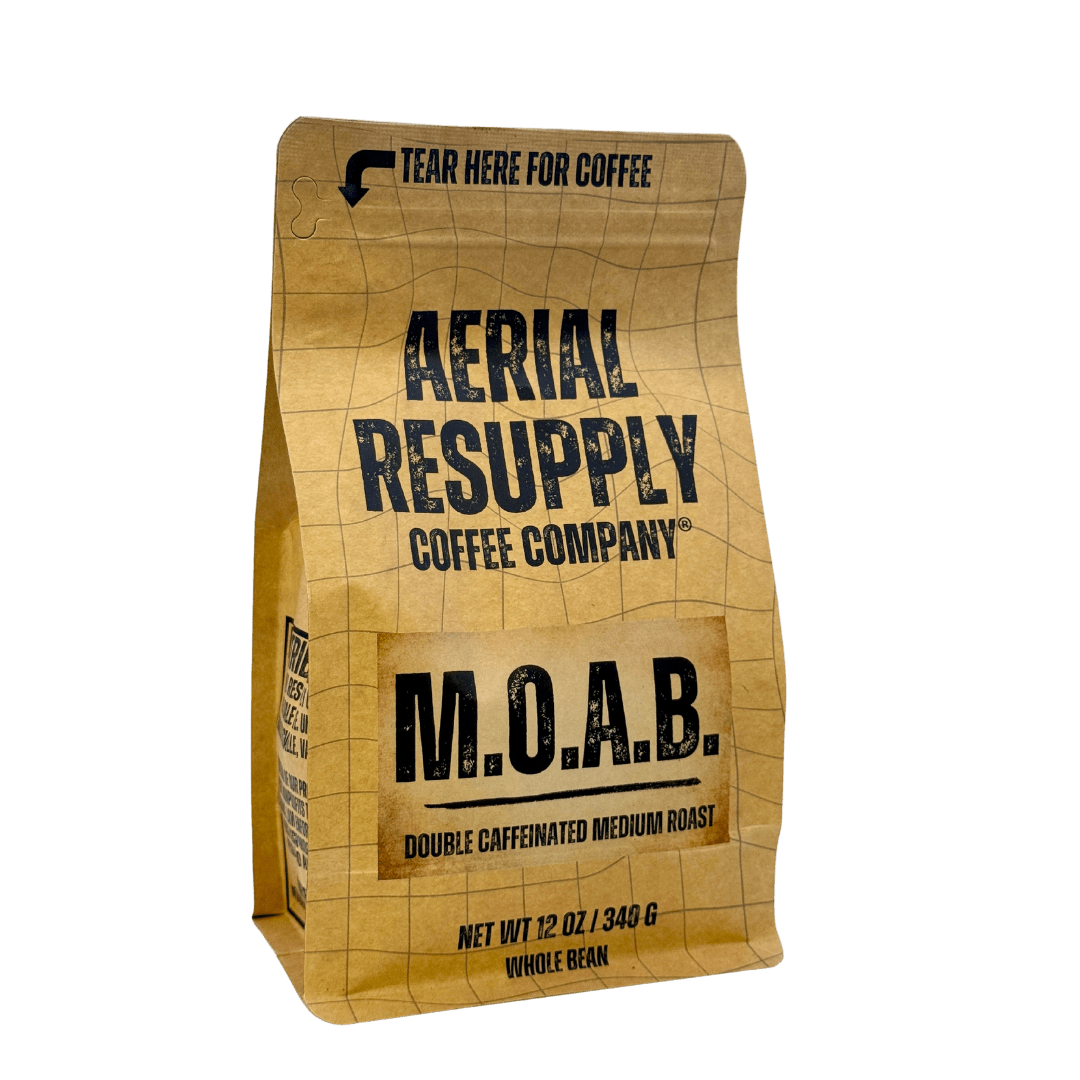
  • MOAB Double Caffeinated Coffee: When the "Mother of All Brews" is required for a 24-hour op, the MOAB provides the highest caffeine content available.

Why Coffee Culture Matters for Vets and First Responders

Why is coffee so deeply ingrained in the military? It’s because coffee is the "shared language" of the service. It’s what an E-4 and an O-5 share while standing on a flight deck. It’s the icebreaker in a stressful briefing and the first sense of comfort a soldier has after a long mission. Choosing a brand like Aerial Resupply Coffee is a way of continuing that culture of excellence and community outside of the uniform.

Time for a Real Resupply

The US military runs on coffee, but it shouldn't have to run on bad coffee. While the DLA will continue to buy the cheap stuff in bulk, you have a choice. You can support a veteran-owned business that understands your mission and your taste buds.

If you're ready to upgrade your morning ritual, start with The Loadout: 6-Roast Coffee Sampler. Don't settle for the "standard issue" battery acid—resupply yourself with the best coffee for the military community.


About the Author: Mike Klemmer is a retired US Army Logistics Officer and the founder of Aerial Resupply Coffee. He has spent over 20 years managing "beans and bullets" for the force and now focuses on ensuring every American is mission-ready with a better cup of coffee.


FAQs

The standard coffee-to-water ratio is 1:16 (1 gram of coffee for every 16 grams of water). For example, a 12-ounce cup (about 355 grams) would need approximately 22 grams of coffee. Adjust to your taste: 1:15 for stronger coffee or 1:17 for lighter brews.

Grind size directly impacts how water extracts flavor from coffee grounds. A grind too fine can result in over-extraction and bitterness, while a grind too coarse can lead to weak, under-extracted coffee. Match the grind to your brewing method:

  • French press: Coarse grind (like sea salt)
  • Drip coffee: Medium grind (like sand)
  • Espresso: Fine grind (like powdered sugar)

Bitterness can result from:

  • Water that’s too hot (above 205°F).
  • Brewing for too long.
  • Using too fine a grind for your brewing method.

To fix this, lower the water temperature, shorten your brew time, or switch to a coarser grind.

Store coffee in an airtight, opaque container like the Fellow Atmos Vacuum Canister. Keep it in a cool, dark place away from heat, light, and moisture. Avoid storing coffee in the fridge or freezer, as condensation can degrade the flavor.

Use a thermometer or a temperature-controlled kettle like the Fellow Stagg EKG Electric Kettle. The ideal brewing temperature is 195°F–205°F. If you don’t have a thermometer, let boiled water sit for 30 seconds before using it.

A burr grinder is strongly recommended for consistency. Burr grinders produce uniform grind sizes, which ensure even extraction and better-tasting coffee. Blade grinders, on the other hand, create uneven particles that can lead to inconsistent flavor.

For the best flavor, use beans within 2–3 weeks of roasting. Check the roast date when buying coffee. At Aerial Resupply Coffee, our beans are roasted in small batches to ensure maximum freshness when they reach your door.

Start with these three simple upgrades:

  1. Use freshly roasted, high-quality beans like MOAB Medium Roast.
  2. Invest in a burr grinder for precise grind sizes.
  3. Measure coffee and water with a digital scale to ensure consistent ratios.

The French press is a great starting point for beginners. It’s straightforward, requires minimal equipment, and delivers rich, full-bodied coffee. Pair it with a reliable burr grinder and a scale for consistent results.

At Aerial Resupply Coffee, every purchase helps support veterans, military spouses, and first responders. By choosing our coffee, you’re not just enjoying bold, flavorful blends—you’re contributing to a meaningful mission and honoring those who serve.