
The Healthiest Way to Drink Coffee (It Is Mostly About What You Stop Putting In It)
The healthiest way to drink coffee is paper filtered, black or close to it, one to four cups a day, and finished well before bedtime. The coffee is rarely the problem. The 400-calorie syrup situation on top of it usually is.
Here is what the research actually supports, and the small changes that keep your coffee on the right side of it. Not medical advice. If you have a heart condition, are pregnant, or take medication, ask your doctor.
If your coffee needs sugar to be drinkable, the coffee is the problem.
Most people load up on creamer and sugar because the coffee underneath is bitter. Fire Watch is a Colombian medium roasted to stay smooth, stone fruit and caramel, easy to drink black. Cutting back on caffeine? BLANKS is Swiss Water decaf, decaffeinated with water instead of chemical solvents.
Shop Fire WatchShop BLANKS DecafSubscribe and your first order is 30% off automatically. No code. Every delivery after that is 15% off, and you can change or cancel anytime.
Is coffee actually good for you?
For most healthy adults, moderate coffee drinking looks more helpful than harmful. Large reviews of observational studies have linked about three to four cups a day with a lower risk of death from several causes, along with lower rates of type 2 diabetes, liver disease, and Parkinson's.
The honest caveat: most of this research shows association, not proof. Coffee drinkers may differ in other ways. Still, the pattern has held up across a lot of studies and millions of people, and decaf shows some of the same associations, which points at more than just caffeine.
What is the healthiest way to brew coffee?
Through a paper filter. Unfiltered coffee contains natural oils called cafestol and kahweol that can raise LDL cholesterol. A paper filter catches most of them. A large Norwegian study found filtered coffee drinkers had lower mortality than people who drank unfiltered coffee.
| Brew method | Cholesterol-raising oils | Notes |
|---|---|---|
| Drip machine with paper filter | Low | Best everyday choice |
| Pour over with paper filter | Low | Same benefit, more control |
| AeroPress with paper filter | Low | Great option |
| K-Cup pods | Low | Pods have a built-in filter |
| Espresso and moka pot | Moderate | Small servings keep the dose down |
| French press, cowboy, Turkish | High | Fine as a treat, not your daily pot if cholesterol matters |
Is black coffee healthier than coffee with cream and sugar?
Much healthier. Black coffee has almost no calories. A large flavored coffee drink can carry more sugar than a can of soda. Do that daily and it cancels out anything good the coffee was doing.
- Step down gradually. Cut the sugar in half for two weeks, then half again.
- Swap flavored creamer for a splash of whole milk. Less sugar, and it still takes the edge off.
- Fix the coffee instead of hiding it. A smooth medium roast is far easier to drink black than a burnt one.
How much coffee is healthy per day?
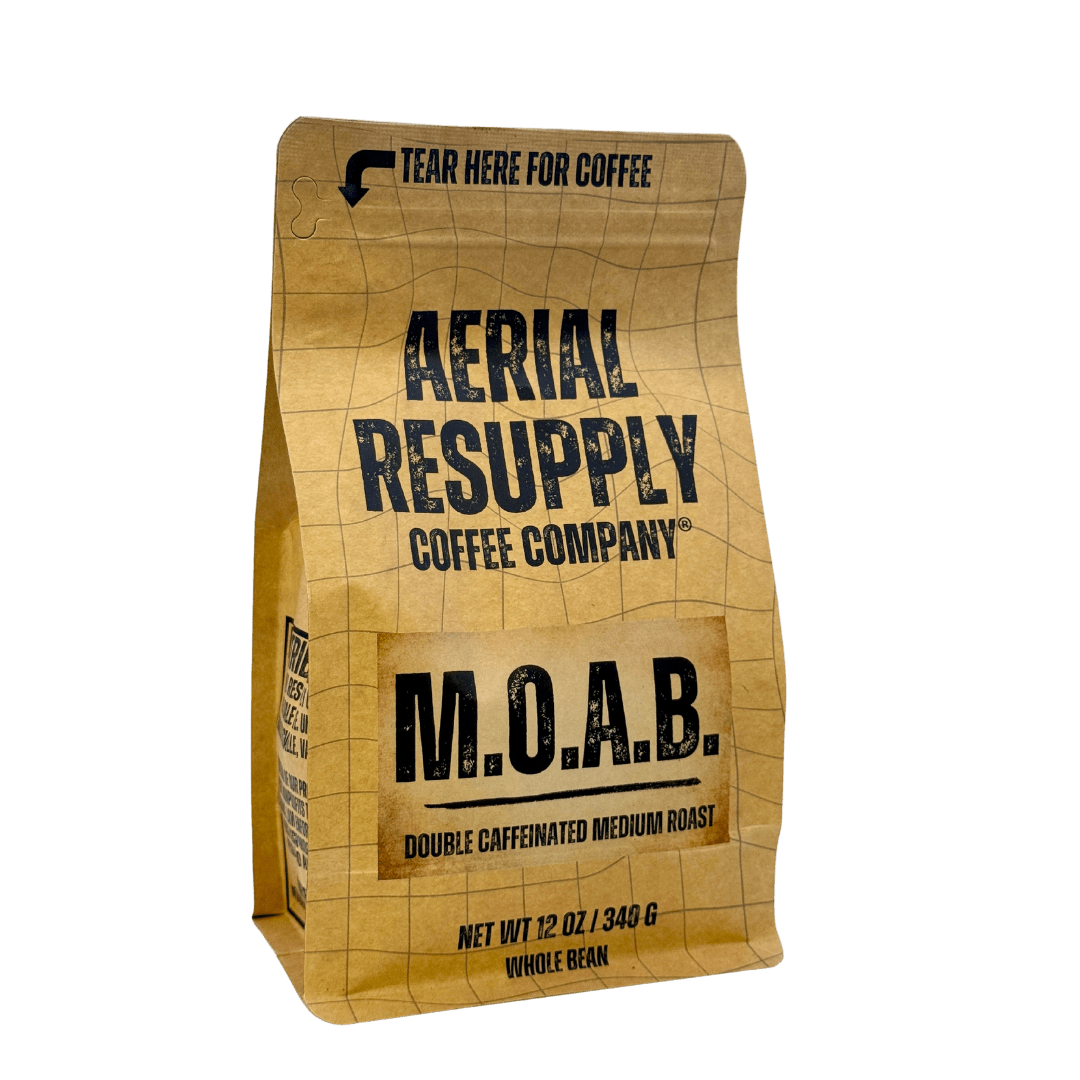
The FDA puts about 400 milligrams of caffeine a day as the amount not generally associated with problems for healthy adults. That is roughly four regular cups. Pregnant women are commonly advised to stay under about 200 milligrams. High-caffeine coffees like MOAB count as about two cups each.
Want more cups without more caffeine? Make the afternoon ones decaf.
When is the healthiest time to drink coffee?
Morning through early afternoon. Caffeine has a half-life of around five hours, and a big dose taken even six hours before bed has been shown to cut sleep. Bad sleep undoes a lot of what coffee might be doing for you.
A practical rule: no caffeine after about 2 p.m. if you sleep at 10. Shift workers, see our night shift coffee plan.
Does coffee dehydrate you?
Not in normal amounts. Caffeine has a mild diuretic effect, but the water in a cup of coffee more than makes up for it for regular drinkers. Your coffee counts toward your fluids.
Is decaf coffee still healthy?
Yes. Decaf keeps most of the compounds found in regular coffee, and several studies link it to some of the same benefits. How it is decaffeinated matters to some people, which is why BLANKS uses the Swiss Water Process. More in is decaf actually caffeine free.
The healthy habit is the one you keep
Pick a coffee smooth enough to drink black and put it on a schedule so you are never stuck with the office pot. First subscription order is 30% off automatically, 15% off every delivery after, change or cancel anytime.
Subscribe to Fire WatchTry 6 roasts for $8.99Questions people ask
What is the healthiest way to drink coffee?
Paper filtered, black or with a little milk, one to four cups a day, and finished several hours before bed. Paper filters remove oils that can raise cholesterol, and skipping sugar avoids the biggest downside of most coffee habits.
Is black coffee good for you?
For most healthy adults, yes. Black coffee has almost no calories, and moderate coffee drinking is associated in research with lower risk of several diseases. The research is observational, so talk to your doctor about your own situation.
Is French press coffee bad for cholesterol?
Unfiltered coffee like French press contains cafestol and kahweol, oils that can raise LDL cholesterol. A paper filter removes most of them. If cholesterol is a concern, use a paper-filtered method for your daily coffee.
How many cups of coffee a day is healthy?
Up to about 400 milligrams of caffeine a day, roughly four regular cups, is the amount the FDA says is not generally associated with problems for healthy adults. Pregnant women are usually advised to stay under about 200 milligrams.
Is decaf coffee healthy?
Yes. Decaf keeps most of the compounds in regular coffee, and research links it to some of the same benefits. Swiss Water Process decaf removes caffeine using water rather than chemical solvents.