
Coffee vs Energy Drinks: What Actually Differs
How does the caffeine compare?
Closely. A typical energy drink runs 80 to 200mg against about 95mg for an eight ounce coffee. The stimulant content is broadly similar. Everything else is not.
Large energy drinks reach 300mg, which approaches the 400mg daily ceiling most health authorities recommend.
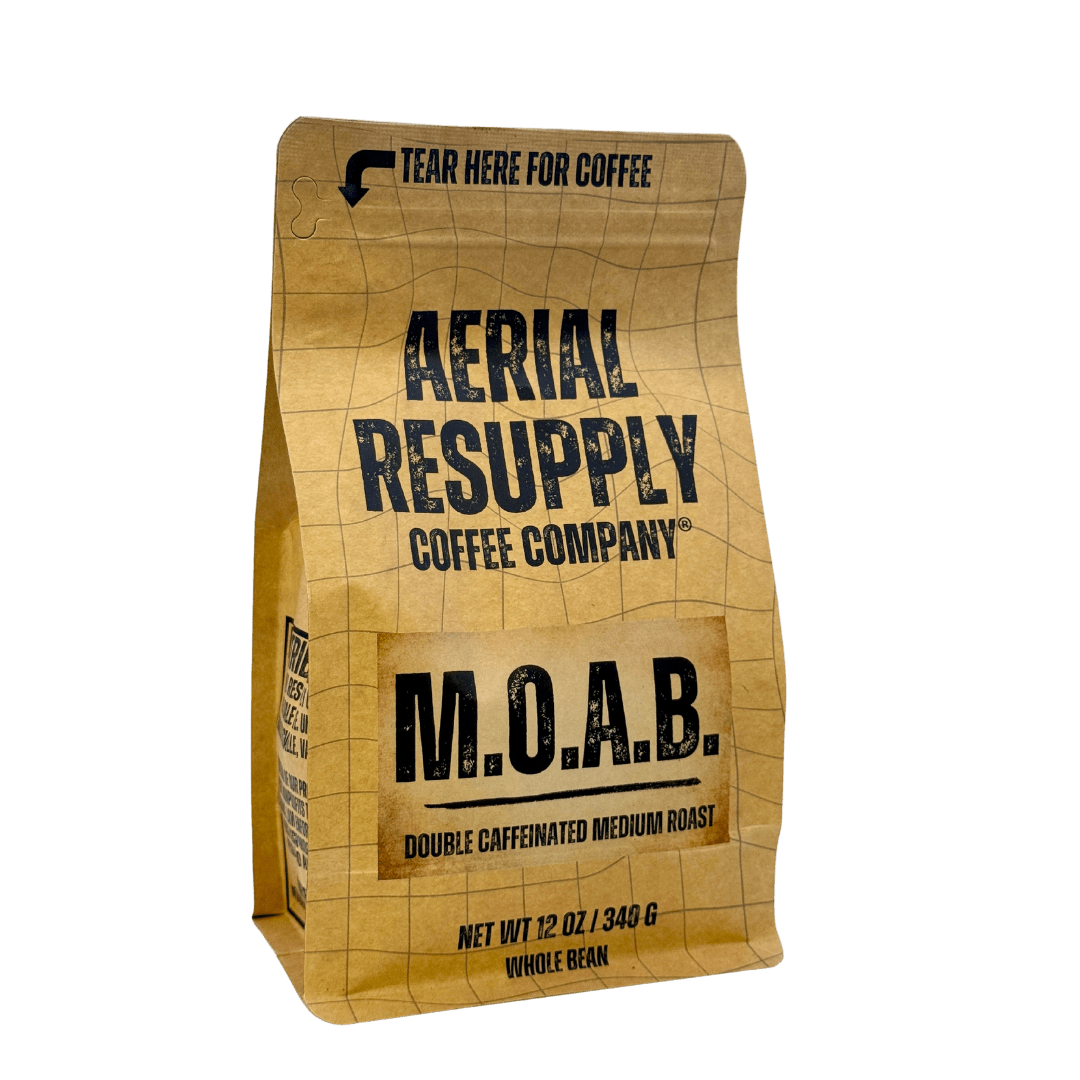
If caffeine is the point, MOAB is 100% robusta and carries roughly twice what a standard arabica does.
Coffee lets you dose in smaller increments, which most people find easier to manage.
| Coffee (8 oz) | Energy drink (16 oz) | |
|---|---|---|
| Caffeine | About 95 mg | 80 to 300 mg |
| Sugar | 0 g | 25 to 60 g |
| Calories | About 2 | 200 to 280 |
| Cost per serving | About $0.20 to $0.40 | $2.50 to $4.00 |
| Additives | None | Taurine, B vitamins, sweeteners |
Once you know the difference, the only question left is which bag.
The names matter less than what you actually like. Both are worth drinking. Neither is worth overpaying for.
What decides whether either is any good is the coffee you started with.
See what people order most →What about the crash?
The crash people describe from energy drinks is usually the sugar, not the caffeine. A rapid blood sugar rise and fall on top of a caffeine peak produces a much sharper drop.
Black coffee has no sugar to crash from, so the taper is gentler.
Sugar-free energy drinks remove that variable and land closer to coffee.
Most bad versions of either are just bad coffee underneath.
Milk hides a lot but it does not fix a roast that was scorched. If yours tastes flat at home, the recipe is not the problem.
A roast with real body cuts through. A thin one disappears.
Roasts with body →What does the cost difference add up to?
Substantially. One energy drink a day at three dollars is roughly 1,100 dollars a year. The same caffeine from home-brewed coffee is closer to 100.
That gap is the strongest practical argument and it rarely gets made.
A twelve ounce bag of specialty coffee makes sixteen to twenty cups for under twenty dollars.
Pick one bag, learn it, and stop guessing.
You do not need a shelf of options. You need one roast you know how to use and a reason to never be out of it.
- Pick the roast that suits how you actually brew.
- Set it to resupply on a schedule that matches what you drink.
- Stop thinking about it. You do not hit zero again.
Is one healthier than the other?
Coffee has a large evidence base associating it with positive outcomes. Energy drinks carry the sugar load and, in large sizes, caffeine amounts that are easy to overshoot on.
What you add to coffee matters. Two syrup lattes a day is a different question than two black coffees.
Both are fine in moderation. The dose and the sugar are what actually differ.
Great coffee for people who have somewhere to be.
However you take it, the day goes better when the coffee was worth making.
Subscriptions take 30% off the first order automatically. No code, nothing to remember. One time orders take 15% with WELCOME15.
Shop the lineup →Questions people actually ask
Do energy drinks have more caffeine than coffee?
Sometimes. A typical energy drink runs 80 to 200mg against about 95mg for an eight ounce coffee. Large formats can reach 300mg, which is most of the recommended daily limit.
Why do energy drinks cause a crash?
Usually the sugar rather than the caffeine. Twenty-five to sixty grams of sugar produces a sharp rise and fall that lands on top of the caffeine curve.
Is coffee cheaper than energy drinks?
Considerably. Home-brewed coffee runs roughly twenty to forty cents a serving against two to four dollars for an energy drink, which is over a thousand dollars a year at one a day.
How much caffeine is safe per day?
Most health authorities put the limit around 400mg for healthy adults, roughly four cups of drip coffee or two large energy drinks.
Are sugar free energy drinks better?
They remove the sugar crash, which is most of the difference. The caffeine content and cost gap against coffee remain unchanged.