Coffee and tea cups side by side comparison

Coffee vs. Tea: An Honest Comparison (With a Declared Winner)

Coffee vs. Tea: An Honest Comparison (With a Declared Winner)

TL;DR Coffee delivers more caffeine faster, with greater flavor complexity and broader preparation options. Tea offers L-theanine for smoother sustained energy and lower acidity. Both have legitimate health benefits. For high-output, performance-oriented people who need reliable morning energy, coffee wins. Written by Michael Klemmer, 20-year U.S. Army logistics officer and founder of Aerial Resupply Coffee in Charlottesville, VA.

I sell coffee, so take this comparison for what it is. But I have no interest in writing something that's obviously wrong just to make a sale. Tea is a legitimate option with real advantages. This article gives it a fair shot and then explains why, for most of the people reading this, coffee still wins.

The comparison matters because a lot of people are choosing between the two based on bad information. Vague claims about "antioxidants" and "clean energy" on both sides. This cuts through it.

What Is the Actual Caffeine Difference Between Coffee and Tea?

Coffee has significantly more caffeine than tea. An 8-ounce cup of brewed coffee delivers 80 to 200mg of caffeine depending on the roast, bean origin, and brew method. An 8-ounce cup of black tea delivers 40 to 70mg. Green tea runs 20 to 45mg. That is not a close comparison.

The onset speed is also different. Coffee caffeine hits the bloodstream within 15 to 45 minutes and peaks around 30 to 60 minutes after consumption. Tea caffeine absorbs at a similar rate but the lower dose means the subjective effect is milder. If you need to be functional at 0500, the math is not complicated.

Tea does have one legitimate counterpoint here: L-theanine. It's an amino acid found almost exclusively in tea that modulates caffeine's effect, producing what researchers describe as "calm alertness." The jitter without the edge. It's real, and it's a genuine advantage over coffee for people who are caffeine-sensitive or who work in environments requiring sustained focus without the adrenaline spike.

For When Tea Isn't Enough

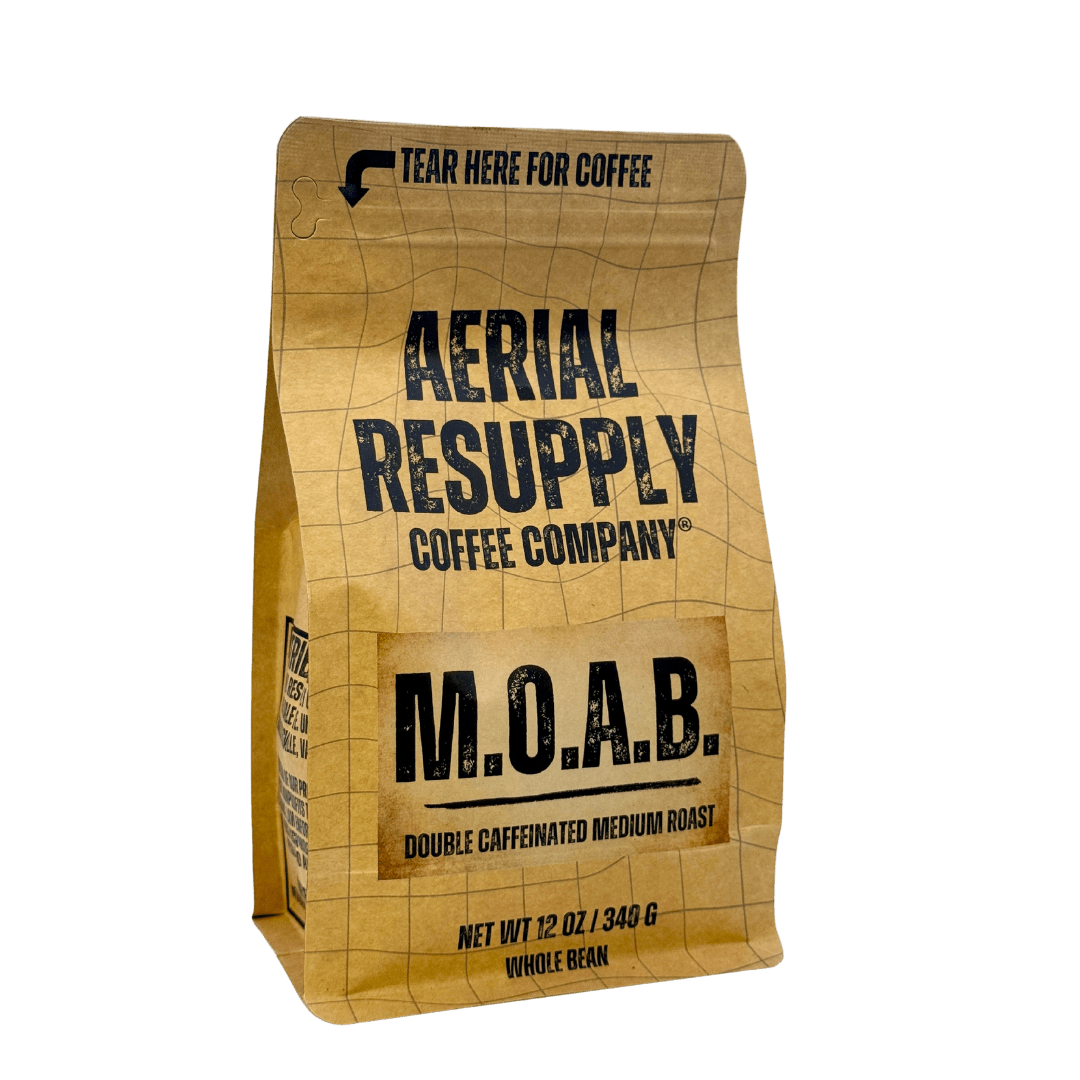
MOAB is ARC's double-caffeinated blend. If the reason you're reading a coffee vs. tea comparison is because you need more energy, this is the answer. Twice the caffeine of standard coffee. No apologies.

Shop MOAB →

Which Has More Health Benefits: Coffee or Tea?

Both have documented health benefits and neither one is a health risk when consumed in reasonable amounts. The research does not decisively favor one over the other, and anyone telling you it does is selling something.

Coffee is one of the largest single sources of antioxidants in the Western diet, which says more about Western diets than it does about coffee. Studies have associated regular coffee consumption with reduced risk of type 2 diabetes, Parkinson's disease, liver disease, and certain cancers. The data on cardiovascular effects has shifted over the years. Current research suggests moderate coffee consumption (2-4 cups per day) is either neutral or mildly beneficial for most people.

Tea, particularly green tea, has a strong research record for cardiovascular health, largely attributed to catechins and EGCG, polyphenols that have shown anti-inflammatory and antioxidant effects in numerous studies. The L-theanine and caffeine combination in tea has been studied for cognitive performance, with some evidence suggesting it improves attention and reduces anxiety more than caffeine alone.

The honest answer: if your baseline health is the concern, both coffee and tea fit into a reasonable diet. The difference is not dramatic enough to justify switching from one to the other purely for health reasons.

Is Coffee or Tea Easier on the Stomach?

Tea wins this one. Black tea has a pH of around 4.9 to 5.5. Coffee typically runs between 4.5 and 5.0, making it more acidic on average. For people with acid reflux or sensitive stomachs, that difference is meaningful.

Coffee also contains compounds like chlorogenic acids that can stimulate acid production in the stomach. For most people, this is a non-issue. For some, it's the reason they've already switched to tea and are done with this argument.

There are lower-acid coffee options that address this. Cold brew, for example, produces coffee with roughly 67% less acid than hot-brewed coffee. Light roasts, counterintuitively, tend to be lower in acidity than dark roasts despite tasting brighter. ARC's Hercules blonde roast is the option for people who want coffee without the stomach issue.

How Do Coffee and Tea Compare on Preparation and Cost?

Coffee requires more equipment and more variables to get right. A good cup of coffee involves grind size, water temperature, brew ratio, and timing. Get one wrong and the cup reflects it. That's not a flaw, that's part of the appeal for people who care about it. But it does mean the floor for bad coffee is lower than the floor for bad tea.

Tea is more forgiving. Hot water, a bag or some loose leaf, two to five minutes. The variance between a mediocre cup and a good cup is narrower. For people who just want something warm and functional in the morning without thinking about it, that matters.

Cost-per-cup favors both options over energy drinks, which is the relevant comparison for most people in this audience. A bag of quality loose-leaf tea runs $0.20 to $0.50 per cup. Quality coffee runs $0.30 to $0.80 per cup depending on the bean and the preparation method. A Red Bull costs $3. The math is the math.


Coffee vs. Tea: Side-by-Side Comparison

Variable Coffee Tea
Caffeine Content 80–200mg per 8oz cup 20–70mg per 8oz cup
Onset Speed 15–45 minutes, peaks at 30–60 min Similar absorption, milder effect
Duration 4–6 hours half-life 4–6 hours (modulated by L-theanine)
Antioxidants High — chlorogenic acids, polyphenols High — catechins, EGCG (green tea)
Acidity (pH) 4.5–5.0 (more acidic) 4.9–5.5 (less acidic)
Preparation Time 3–10 minutes depending on method 2–5 minutes
Flavor Range Extremely wide — fruity to earthy to chocolatey Wide — grassy, floral, malty, smoky
Cost Per Cup $0.30–$0.80 (quality home brew) $0.20–$0.50 (quality loose leaf)

Does the Caffeine in Coffee Actually Hit Differently Than Tea?

Yes, and the mechanism is straightforward. Higher caffeine dose plus faster peak absorption equals a more pronounced effect. For most people, coffee produces a sharper mental activation than tea. That is the point. If you need to be alert at 0500 before a brief or a long drive or a shift that starts before most people's alarms go off, that distinction is not academic.

The L-theanine advantage in tea is real but it cuts both ways. The smooth, sustained focus it produces is legitimate. But for people who need peak alertness in a short window, the modulated effect of tea can feel like partial credit. You're functional, not sharp. Coffee delivers the spike when the spike is the requirement.

From a logistics officer's perspective, this is a capability question. Tea is better suited to long, sustained cognitive work in low-stress environments. Coffee is better suited to short, high-intensity cognitive demands. Most veterans I know have lived in the second category more than the first.

The Everyday Option

Firewatch is ARC's flagship Colombian medium roast. The all-day coffee. 150–200mg caffeine per cup, no bitterness, no energy crash. If you want consistent daily performance, this is the roast.

Shop Firewatch →

So Is Coffee Better Than Tea? Here Is the Honest Answer.

For the specific audience reading this, yes. Coffee wins on caffeine output, onset speed, flavor complexity, and psychological baseline. The morning ritual built around coffee is different from the one built around tea, and for most veterans and high-output people, the coffee version is the one that fits the day.

Tea is not a bad choice. It has real advantages in acidity, stomach tolerance, and the L-theanine modulation effect. If you have a legitimate medical reason to avoid coffee, or you genuinely prefer the lower-stimulation profile of tea for late-day use, that's a rational call. Tea is not the enemy.

But if you're comparing coffee and tea because you're looking for more energy, better mornings, or a caffeine source that actually does something when you need it to, tea is not the answer. Coffee is.

Frequently Asked Questions

Is coffee healthier than tea, or is it the other way around?

Neither has a decisive health advantage over the other. Both contain antioxidants and have been associated with reduced risk of several chronic conditions in long-term studies. Coffee has stronger associations with liver health and Parkinson's prevention. Green tea has stronger associations with cardiovascular health via catechins. For most people, the choice between the two is a preference decision, not a health decision.

Does tea have more or less caffeine than coffee?

Tea has significantly less caffeine than coffee. An 8-ounce cup of black tea delivers 40 to 70mg of caffeine. An 8-ounce cup of brewed coffee delivers 80 to 200mg depending on the roast and brew method. Green tea runs even lower at 20 to 45mg per cup. If caffeine output is your metric, coffee is not a close competition.

What is L-theanine and does it actually do anything?

L-theanine is an amino acid found almost exclusively in tea leaves. When combined with caffeine, research suggests it produces a state of "calm alertness" by moderating the stimulant effect of caffeine without eliminating it. Multiple studies have shown the L-theanine and caffeine combination improves attention and reduces the anxiety and jitteriness associated with caffeine alone. It is a genuine, research-backed benefit of tea that coffee does not replicate.

Why does coffee upset some people's stomachs but tea doesn't?

Coffee is more acidic than most teas (pH 4.5 to 5.0 vs. 4.9 to 5.5 for black tea) and contains chlorogenic acids that stimulate stomach acid production. For people with acid reflux or gastritis, this is a real issue. Cold brew coffee significantly reduces acidity and is often tolerated by people who cannot handle hot-brewed coffee. Light roasts are also lower in acidity than dark roasts despite tasting brighter.

Which should I drink in the morning and which in the afternoon?

Coffee in the morning, tea in the afternoon is a reasonable pattern if you want to use both. Coffee's higher caffeine dose and faster onset make it better suited to the first few hours of the day when you need peak alertness. Tea's lower caffeine content and L-theanine profile make it a better afternoon option for people who are caffeine-sensitive or who want to wind down without cutting caffeine entirely. Caffeine's half-life is 4 to 6 hours regardless of source, so timing matters for sleep quality.

You already know where you stand on this debate. May as well drink something worth standing behind.

Browse the Full Lineup →

First subscription order at 30% off with code FLY30.


OUR RETAIL STORE

705 Dale Ave, Unit E
Charlottesville, VA 22903

Mon - Fri, 8:30am - 2:30pm
Saturday, Closed
Sunday, Closed

The Aerial Resupply Coffee Roastery Charlottesville Virginia Whole Bean ground and kcup premium coffee

Visit the Roastery

Stop by our roastery in Charlottesville to see where the mission begins. Grab a bag, talk coffee, and watch veteran-owned craftsmanship in action.

📍 705 Dale Ave, Unit E — Charlottesville, VA 22903
⏰ Mon–Fri: 830am – 230pm