Coffee vs. Matcha: A Direct Comparison (From the Coffee Side)
There is a version of this article that would dismiss matcha in the first sentence and spend 1,500 words cheerleading coffee. That version would be useless to you. Matcha is a real competitor with real advantages, and if you are going to make the case for coffee, you have to make it honestly or not at all.
This is the honest version. Michael Klemmer spent 20 years as a U.S. Army logistics officer before founding Aerial Resupply Coffee. He has been up before 0500 more mornings than he can count, and he has tried every approach to the morning energy problem. The answer he landed on is in the name of his company. But the data on both sides is below, and you can make your own call.
How Much Caffeine Does Coffee Have Compared to Matcha?
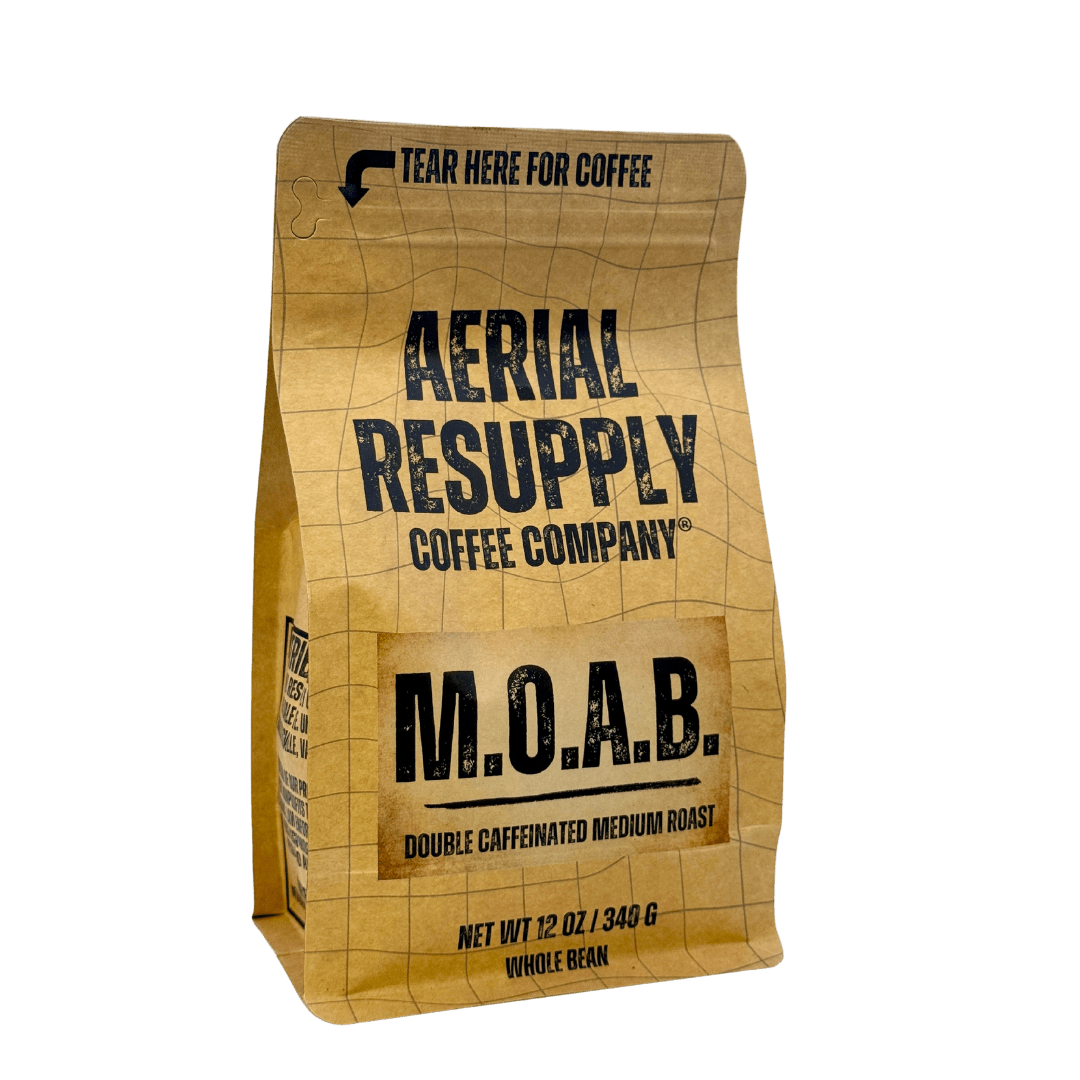
Coffee wins this category by a significant margin. A standard 8oz cup of drip coffee delivers 80-120mg of caffeine. A shot of espresso runs 60-75mg. ARC's MOAB, a double-caffeinated Robusta blend, comes in above 200mg per cup. Matcha, prepared as a traditional bowl with one to two grams of powder, delivers 25-70mg depending on grade and preparation.
Ceremonial-grade matcha at two grams sits around 60-70mg. Most matcha lattes made with a single gram come in closer to 30-40mg. If the comparison you are running in your head is "which one gives me more caffeine," coffee is not close.
That said, raw caffeine quantity is only part of the energy story. How your body processes that caffeine matters just as much, which is where the next section changes things.
Matcha tops out around 70mg caffeine per cup. MOAB starts at 200mg+. If the reason you're comparing these two is because you need more energy, you already know where this ends.
Shop MOAB →Does Matcha Give You Better Energy Than Coffee?
This is where the matcha argument is strongest, and it deserves a straight answer. Matcha contains L-theanine, an amino acid that modulates how caffeine works in the brain. L-theanine slows the absorption of caffeine, reduces the cortisol spike that causes the jittery feeling, and extends the energy window. The result is often described as calm alertness rather than the sharp spike-and-crash cycle some people experience with coffee.
The scientific literature on this is consistent: the combination of caffeine and L-theanine produces measurably better performance on sustained attention tasks than caffeine alone. One frequently cited 2008 study in Biological Psychology found that 97mg caffeine plus 40mg L-theanine improved both speed and accuracy on cognitive tasks more than either compound alone.
Coffee does not naturally contain L-theanine. If you are someone who gets anxious or jittery on coffee, that is a real physiological response, and matcha's energy profile is genuinely smoother for those people. The trade is that you get roughly half to a third of the caffeine. Whether that trade is worth it depends entirely on what you actually need in the morning.
For most of the ARC audience, the answer is no. Logistics officers, mechanics, and fuel truck drivers do not have a jitteriness problem. They have an insufficient caffeine problem. But the honest answer is that these are different tools for different needs.
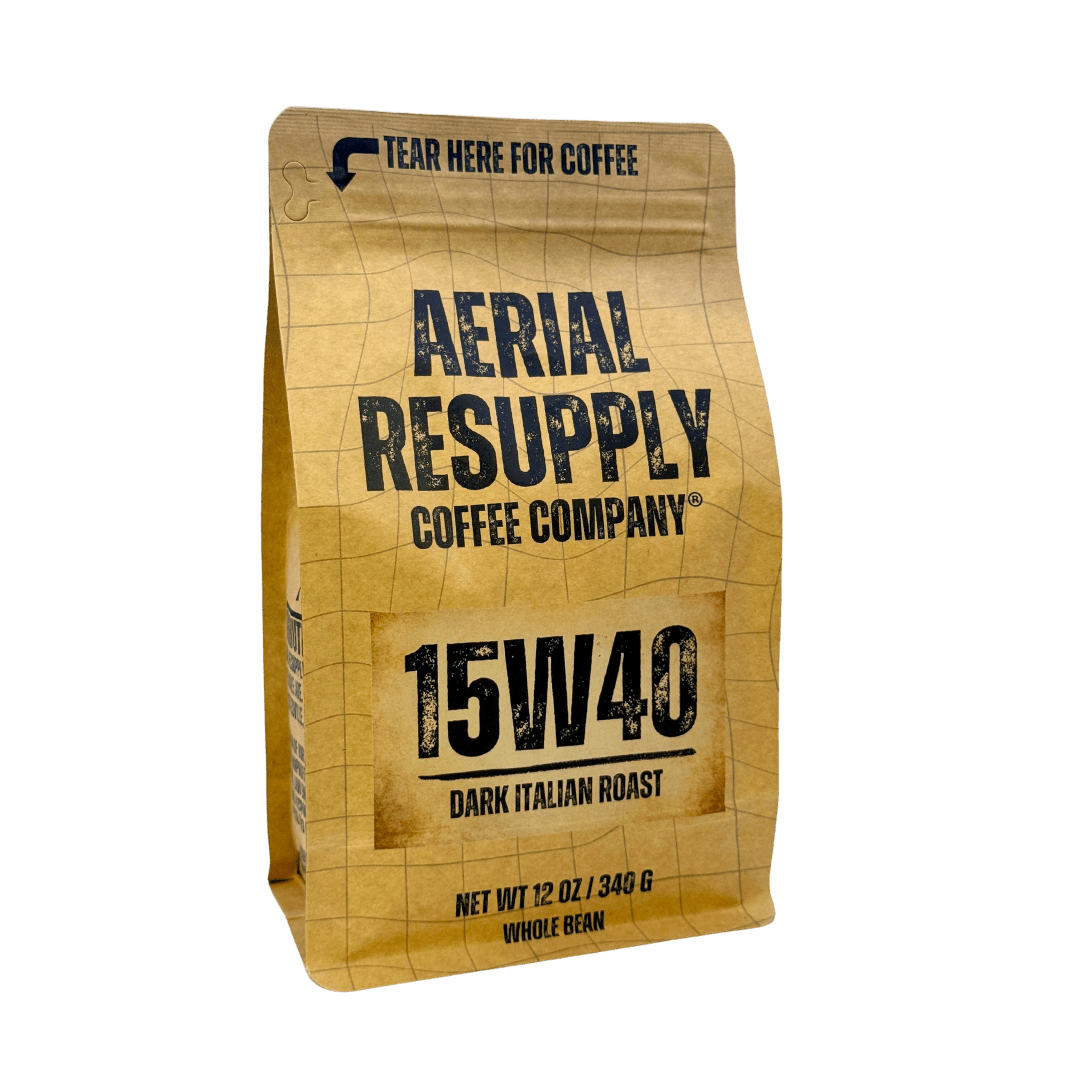
Firewatch is ARC's Colombian medium roast. 150-200mg caffeine, smooth extraction, no bitterness. If you want the caffeine advantage of coffee with a flavor profile that doesn't require explanation, this is the roast.
Shop Firewatch →Which Has More Antioxidants, Coffee or Matcha?
Matcha wins this one, and it is not particularly close. Matcha is a whole-leaf green tea ground into powder. When you drink it, you consume the entire leaf, including the chlorophyll, catechins, and EGCG (epigallocatechin gallate) that are largely strained out of brewed tea. EGCG is one of the most studied antioxidant compounds in the food supply.
Coffee is not without antioxidants. It is actually one of the largest single sources of antioxidants in the average American's diet, primarily through chlorogenic acids. But gram for gram, matcha is significantly denser. Studies comparing ORAC values (a standard measure of antioxidant activity) consistently show matcha outperforming coffee by 3-5x per gram.
If antioxidant density is your primary decision criterion, matcha is the correct choice. Most people drinking coffee at 0500 are not making that calculation, but the data is what it is.
Is Coffee Harder on Your Stomach Than Matcha?
For many people, yes. Coffee is acidic, with a pH typically between 4.7 and 5.0 for drip coffee and lower for espresso. It also stimulates gastric acid production and can aggravate acid reflux, GERD, and irritable bowel symptoms in sensitive individuals. If coffee makes your stomach feel like it's staging a protest, that is not a psychosomatic response.
Matcha is less acidic (pH around 6.0) and generally easier on the GI tract. It does not stimulate gastric acid production to the same degree. For people with chronic digestive issues, matcha is genuinely the better choice from a stomach standpoint.
The counterpoint: most high-quality, properly roasted coffee is less acidic than the cheap stuff. Low-acid roasts, single-origin Colombians processed via washed method, and medium roasts all tend to be significantly easier on the stomach than over-roasted or stale coffee. The acidity problem is partly a quality problem. ARC's Firewatch, a washed Colombian medium, is specifically roasted to avoid the bitterness and harshness that drives most stomach complaints about coffee.
Coffee vs. Matcha: Side-by-Side Comparison
| Category | Coffee | Matcha |
|---|---|---|
| Caffeine Per Serving | 80-200mg (standard to high-caf) | 25-70mg (1-2g ceremonial grade) |
| Energy Onset | 15-30 minutes | 30-45 minutes (L-theanine slows absorption) |
| Energy Duration | 3-5 hours (variable by person) | 4-6 hours (smoother curve, slower drop) |
| Antioxidant Density | High (chlorogenic acids) | Very high (EGCG, catechins, full-leaf) |
| Preparation Time | 3-10 minutes depending on method | 3-5 minutes (whisk method); longer for ceremonial |
| Flavor Range | Extremely wide: fruity, chocolatey, nutty, floral, smoky | Narrow: grassy, vegetal, umami, slightly bitter |
| Cost Per Serving | $0.30-$1.50 (quality varies widely) | $1.00-$3.00 (ceremonial grade) |
| Stomach Impact | More acidic; may aggravate reflux | Less acidic; generally gentler on GI tract |
Which Is Better for Switching From Coffee to Matcha?
If you are considering switching from coffee to matcha, understand exactly what you are trading. You are trading raw caffeine volume and speed of onset for a smoother, longer energy curve and a gentler stomach experience. For some people, that is the right trade. For people who need high-volume caffeine to function before 0600, it is not.
The partial switch is underrated. Some people do well running matcha in the afternoon instead of a second coffee, using matcha's slower onset and longer tail to avoid the afternoon crash without losing sleep. That is a legitimate strategy. It does not require committing to one or the other.
The full switch to matcha makes sense if: you experience anxiety or heart palpitations on coffee, you have diagnosed acid reflux, or you genuinely prefer the flavor profile. It does not make sense if your primary problem is "I need more caffeine than this."
What Does Coffee Actually Have That Matcha Doesn't?
Flavor range, for one. Coffee is one of the most chemically complex beverages in the human diet, with over 800 volatile flavor compounds produced during roasting. A washed Ethiopian Yirgacheffe tastes like blueberries and jasmine. A natural-processed Brazilian tastes like dark chocolate and nuts. A dark Italian roast tastes like roasted caramel and smoke. Matcha tastes like matcha. That is not an insult. It is just a fact about variety.
Speed of effect matters for the people who actually need it. If the mission starts in 30 minutes and you need to be functional now, coffee's faster absorption window is a real operational advantage. Matcha's smoother onset is a feature for some people and a liability for others.
Brewing method versatility is another genuine advantage. You can pull an espresso, run a cold brew overnight, do a pour-over, or use a drip machine. Each produces a different cup with different characteristics. Matcha's preparation window is narrower. Hot water temperature matters (too hot and it turns bitter), and the ceremonial preparation is its own skill set.
Finally, there is the cultural context. The ARC audience spent years in environments where coffee was the fuel that kept the mission running. That is not marketing language. It is memory. The morning ritual of a cup of coffee is connected to something real for a lot of veterans, and that connection has value that does not show up in any comparison table.
Frequently Asked Questions
Is matcha actually healthier than coffee?
On specific metrics, yes. Matcha has higher antioxidant density per gram, is less acidic, and its L-theanine content produces a smoother energy curve. Coffee has more caffeine, faster onset, and is the larger source of antioxidants for most Americans simply by volume consumed. Neither is unambiguously "healthier." The honest answer is that both are good choices and the trade-offs depend on your body's specific responses and what you actually need the drink to do.
Can you drink both coffee and matcha in the same day?
Yes, and some people find this works well. A common approach is coffee in the morning for the fast caffeine hit, then matcha in the afternoon for a slower, lower-caffeine top-up that avoids the crash. The total caffeine load is worth tracking if you are sensitive, but for most people, the combination is not a problem. Monitor how your sleep responds and adjust from there.
Why does matcha not give me the jitters the way coffee does?
L-theanine. It is an amino acid in green tea that binds to the same receptors that caffeine targets, but with a calming rather than stimulating effect. The result is that L-theanine modulates how aggressively caffeine hits your system, slowing the onset and reducing the cortisol spike that causes jitteriness and anxiety in caffeine-sensitive people. Coffee does not naturally contain L-theanine, which is why the energy profile feels different even at lower caffeine doses.
Is ceremonial grade matcha worth the price compared to culinary grade?
For drinking straight, yes. Ceremonial grade matcha is made from the youngest leaves, shade-grown to increase chlorophyll and L-theanine content, and stone-ground to a finer powder. The flavor is smoother and less bitter. Culinary grade is fine for lattes and baked goods where milk or sugar masks the bitterness, but if you are drinking it straight in hot water, the grade difference is noticeable. Expect to pay $1.50-$3.00 per serving for quality ceremonial grade matcha.
Does switching from coffee to matcha help with sleep?
It depends entirely on your timing and caffeine tolerance. If you are drinking coffee late in the day, switching that specific cup to matcha makes sense because of the lower caffeine content and slower onset. Matcha consumed in the afternoon is less likely to affect sleep onset than an afternoon espresso. That said, matcha still contains caffeine, and people who are highly sensitive to caffeine may find that even 40mg in the afternoon affects their sleep. The sleep benefit comes from reducing total afternoon caffeine, not from any sleep-specific property of matcha itself.
You've done the research. You know what you drink. May as well drink something built for how you operate.
First subscription order at 30% off with code FLY30.