Black Coffee and Weight Loss: What the Research Actually Says
If you drink your coffee black, you already know it works. You didn't need a study to tell you that. But there's a difference between knowing something holds and knowing why it holds. This article covers the mechanism — the actual science behind black coffee and weight loss — so you have the data to back up what you're already doing.
Does Black Coffee Actually Help You Lose Weight?
Yes, with specifics. Black coffee is not a weight loss drug. It does not burn fat while you sit still. What it does is documented and real: caffeine raises resting metabolic rate, increases the rate at which your body oxidizes fat as fuel, and suppresses appetite for a measurable window after consumption.
A 1989 study published in the American Journal of Clinical Nutrition found that caffeine increased metabolic rate by 3-11% depending on dose and the individual's body composition. Lean individuals tended toward the higher end. A 2020 meta-analysis in Critical Reviews in Food Science and Nutrition confirmed the thermogenic effect and found fat oxidation increased meaningfully in both trained and untrained subjects at doses between 3-6 mg/kg body weight.
The appetite suppression piece is shorter-lived but real. Research shows ghrelin suppression (the hunger hormone) for approximately 1-3 hours after caffeine consumption. That window matters if you're using black coffee as a deliberate tool, not just a habit.
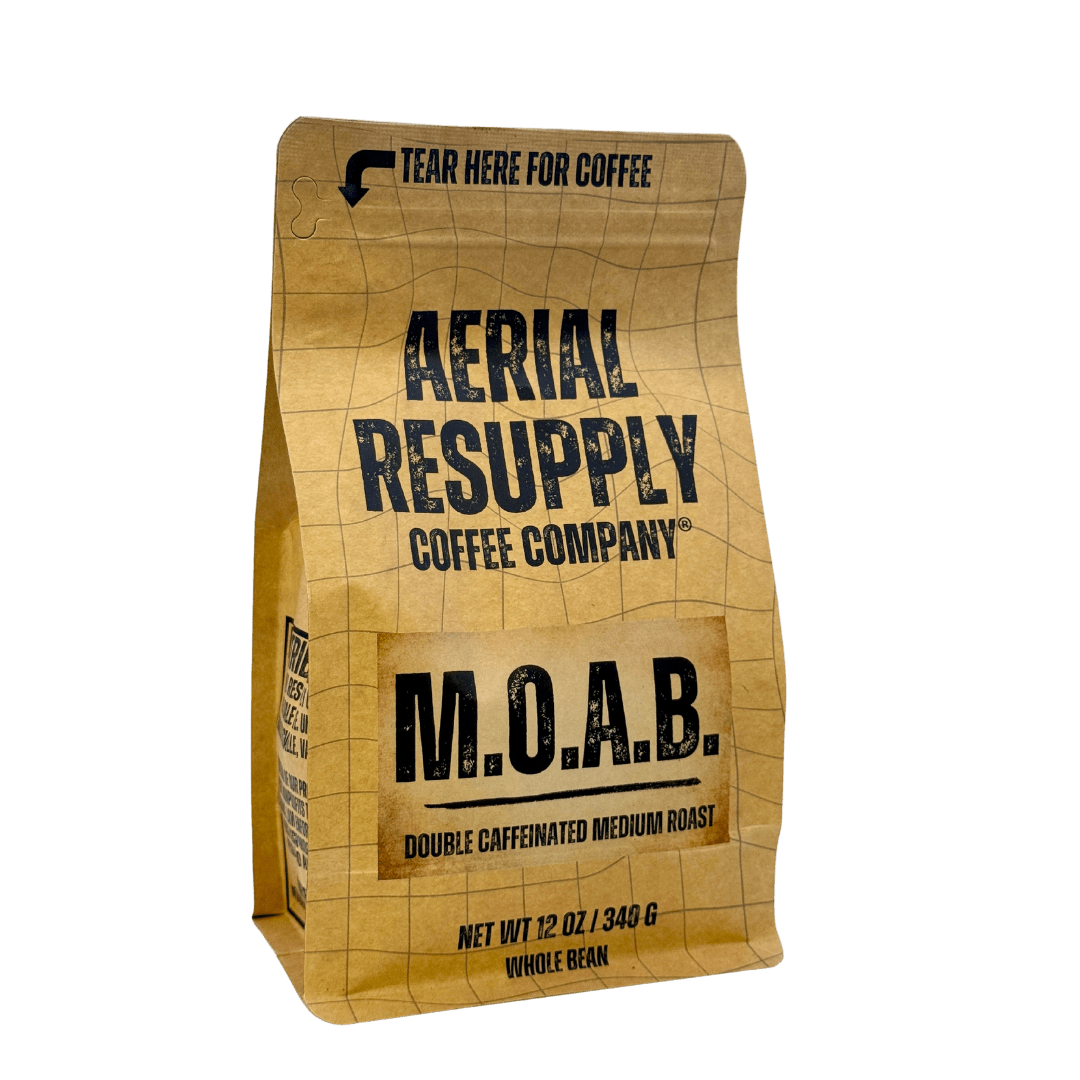
If you're drinking coffee for performance, you're already doing it right by going black. MOAB takes that further — double the caffeine, same zero calories. Higher thermogenic effect, longer appetite suppression window.
Shop MOAB →What Is the Mechanism? How Does Black Coffee Affect Metabolism?
Caffeine works through two primary pathways. First, it inhibits phosphodiesterase, the enzyme that breaks down cyclic AMP. Cyclic AMP is the signal that tells fat cells to release stored energy. When phosphodiesterase is inhibited, that signal stays active longer. More fat is mobilized. More is burned.
Second, caffeine stimulates the release of epinephrine (adrenaline), which directly triggers lipolysis — the breakdown of fat tissue into free fatty acids that can be used as fuel. This is the mechanism behind the thermogenic effect you see in the research. Your body runs slightly hotter, burns slightly more, and does it more efficiently when fat is the available fuel source.
The third pathway is simpler: appetite suppression. Caffeine reduces perceived hunger and increases satiety signals, primarily through effects on the hypothalamus. This effect is strongest in the first hour post-consumption and fades over 2-3 hours as caffeine is metabolized.
How Much Black Coffee Per Day Actually Has an Effect?
The research clusters around 3-6 mg of caffeine per kilogram of body weight to see meaningful thermogenic and fat oxidation effects. For a 180-pound person, that's roughly 245-490 mg of caffeine. A standard 8 oz cup of black coffee delivers 95-200 mg depending on brew method and roast — so 2-3 cups lands most people in the effective range.
More is not always better. Doses above 600 mg/day start producing diminishing returns and side effects that interfere with training and sleep. Sleep quality is directly tied to fat loss and body composition. Burning too hot with caffeine late in the day is a net negative. The research on this is consistent: cut caffeine 6 hours before bed.
For practical purposes: 2 cups in the morning, a third before training if your timing allows. That's the pattern the data supports. It's also the pattern most military people already run on instinct.
Does When You Drink Black Coffee Change the Effect?
Timing matters more for exercise performance than for resting metabolism, but it matters. Consuming black coffee 30-60 minutes before aerobic exercise produces the strongest fat oxidation effect — caffeine peaks in the bloodstream at 45-60 minutes and aligns with the period when your body is drawing on fat as fuel during moderate-intensity work.
Fasted morning coffee (before eating) has shown a slightly stronger fat mobilization effect in some studies, though the difference is modest. If you already train fasted and drink black coffee before the session, you are stacking two inputs that push the same mechanism. That combination is well-documented and supported.
The main practical takeaway: drink black coffee before training, not after. The window before exercise is where the metabolic effect is most applicable to fat loss outcomes.
Firewatch is ARC's Colombian medium roast. 150-200mg caffeine per cup. Zero calories. Smooth enough to drink black without fighting it. If you're not already drinking it black, this is the roast that makes the switch easy.
Shop Firewatch →Black Coffee vs. Coffee With Additions: What the Calories Actually Cost You
The simplest argument for black coffee and weight loss is not the caffeine. It's the calorie math. Black coffee is zero calories. Everything you add to it is a calorie surplus you're now carrying into a conversation about fat loss. Here's what that looks like in real numbers.
| Coffee Type | Calories (per 12 oz serving) | Caffeine Effect | Net Metabolic Impact |
|---|---|---|---|
| Black Coffee | 2-5 kcal | Full thermogenic effect | Net positive — thermogenesis exceeds calorie input by a wide margin |
| Coffee with Sugar | ~50-70 kcal (2 tsp) | Full caffeine effect; insulin spike partially offsets fat oxidation | Reduced — sugar triggers insulin, which suppresses lipolysis |
| Coffee with Cream | ~100-150 kcal (2 tbsp heavy cream) | Caffeine intact; fat calories added | Neutral to slight negative depending on total daily intake |
| Coffee with Sugar and Cream | ~150-220 kcal | Caffeine intact; both insulin spike and calorie load | Net negative — you're working against yourself |
| Blended / Specialty Drinks (e.g., mocha, frappuccino) | 300-600 kcal | Caffeine present but overwhelmed by sugar load | Net negative — functionally a dessert, not a performance input |
The sugar row is worth pausing on. When you add sugar to coffee, the resulting insulin response actively works against lipolysis. Insulin is an anabolic, storage-promoting hormone. It does not coexist peacefully with fat burning. You still get the caffeine, but you've blunted the fat oxidation mechanism that makes black coffee worth talking about.
Does Black Coffee Suppress Appetite, or Does It Just Feel That Way?
It's documented, not placebo. Several peer-reviewed studies have measured ghrelin levels (the primary hunger-signaling hormone) before and after caffeine consumption and found meaningful suppression in the 1-3 hour window post-ingestion. The effect is strongest in the first hour and attenuates as caffeine clears the system.
Practically, this means a cup of black coffee before a meal reduces the amount most people eat at that meal. The reduction is not dramatic — studies typically measure 50-100 fewer calories at the subsequent meal. Over weeks and months, that differential compounds. It doesn't require willpower. It's chemistry.
Where this gets misrepresented is in the "coffee as a meal replacement" idea. Appetite suppression from black coffee lasts 1-3 hours. It does not eliminate hunger for the day. Using it to skip meals entirely tends to produce rebound eating and elevated cortisol, neither of which helps body composition. Use the window. Don't try to extend it indefinitely.
Does the Roast Level Change the Weight Loss Effect?
Slightly. Lighter roasts retain more chlorogenic acid, a polyphenol that has shown modest independent effects on glucose metabolism and fat oxidation in clinical trials. The difference between a blonde roast and a dark roast on this metric is real but small — we're talking a few percent, not a dramatic gap.
Caffeine content varies more by bean type than by roast level. Robusta beans contain roughly twice the caffeine of Arabica. A dark robusta blend like MOAB will deliver a meaningfully higher thermogenic dose than a light Arabica roast — not because of roast chemistry, but because of the underlying bean. If the caffeine mechanism is the goal, bean selection matters more than color in the bag.
What doesn't change across roast levels: zero calories, no insulin response, and the core fat oxidation mechanism. The platform is consistent. The dose is what varies.
Frequently Asked Questions
How much black coffee per day is effective for weight loss?
The research points to 2-4 cups of black coffee per day as the practical effective range for most adults. That delivers roughly 200-400mg of caffeine, which is sufficient to produce measurable thermogenic and fat oxidation effects without the diminishing returns and sleep disruption that come with higher doses. Timing matters too — front-load your intake in the morning and cut off by early afternoon.
Should I drink black coffee before or after exercise for fat burning?
Before. Caffeine peaks in the bloodstream 45-60 minutes post-consumption, which aligns with the window where your body is actively drawing on fat as fuel during moderate-intensity aerobic work. Drinking black coffee 30-60 minutes before training stacks two fat-oxidation inputs at the same time. Post-workout coffee still has benefits for recovery, but the fat-burning window has already passed.
Does decaf coffee have the same effect on weight loss?
Mostly no. The primary mechanisms behind black coffee's metabolic effects — thermogenesis, lipolysis, and appetite suppression — are driven almost entirely by caffeine. Decaf retains chlorogenic acid, which has a modest independent effect on glucose metabolism, but the thermogenic and fat oxidation effects are negligible without caffeine. Decaf is not a functional substitute if the goal is metabolic effect.
Does adding anything to coffee cancel out the weight loss benefits?
Sugar is the most damaging addition. It triggers an insulin response that directly suppresses lipolysis — the fat-breakdown mechanism that makes black coffee effective. Cream adds calories but doesn't blunt the mechanism the same way. Blended drinks and flavored syrups are simply in a different category; the calorie loads involved are large enough to offset any metabolic benefit entirely. Black is the baseline. Everything else is a step back.
Can black coffee help with belly fat specifically?
The research shows caffeine increases overall fat oxidation, with some studies noting stronger effects on visceral (abdominal) fat during aerobic exercise. That said, spot reduction is not how the body works — fat loss occurs systemically. Black coffee supports the conditions for fat loss; it doesn't direct where fat comes from. Combined with a consistent training routine and caloric discipline, the effect on total body fat, including abdominal fat, is real and documented.
The research is clear. The commitment is yours. Black coffee is what it is — zero calories, real effect, no excuses. First subscription order is 30% off with code FLY30.