
Dark roast doesn't have more caffeine. It actually has slightly less. The difference between light and dark roast is about 6mg per cup — less than two sips of soda. If you've been choosing your roast for the caffeine, you've been optimizing the wrong variable. Here's what actually matters.
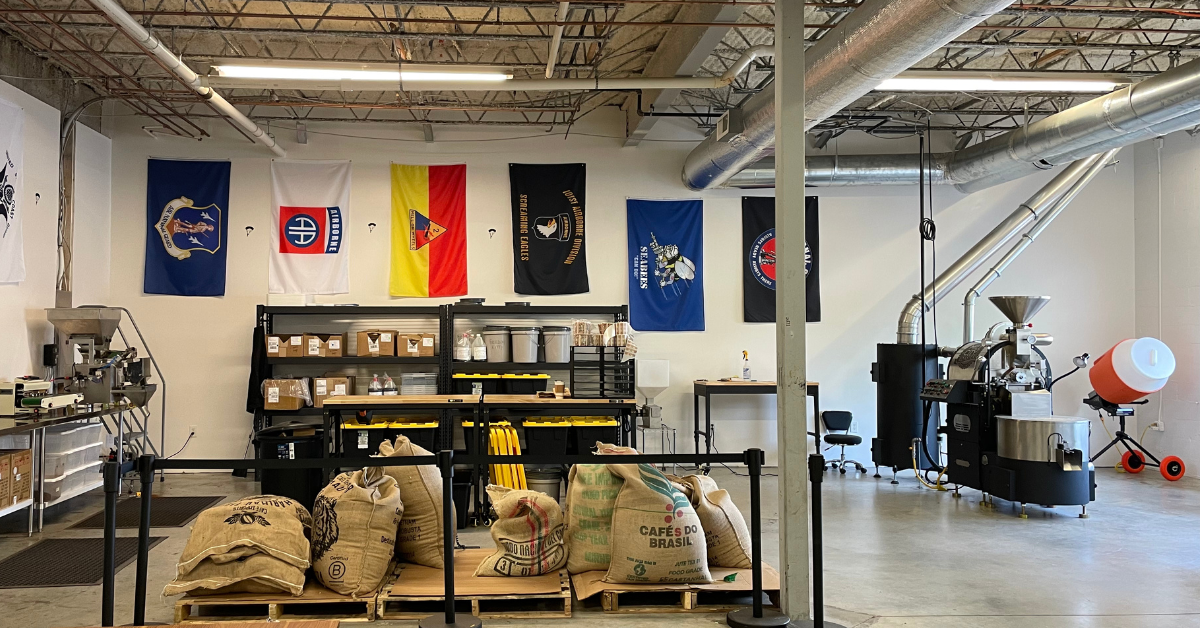
At Aerial Resupply Coffee — a veteran-owned specialty coffee roastery in Charlottesville, VA, founded by Michael Klemmer, a 20-year U.S. Army logistics officer — we roast small-batch to order. Light, medium, dark, and double-caffeinated. We know exactly what's in each bag because we roast it ourselves. This is the straightforward version of the caffeine conversation that most coffee sites overcomplicate.
Why Do People Think Dark Roast Has More Caffeine?
Dark coffee looks stronger. It tastes bolder. It smells more intense. The assumption that intensity equals caffeine is completely understandable — and completely wrong.
Caffeine is a heat-stable compound. It doesn't burn off during roasting. What does change is the bean's density and moisture content. Dark roast beans are larger and lighter because they've lost more moisture during the longer roast. That physical difference is where the confusion comes from:
- Measuring by weight (grams): Light roast has slightly more caffeine — denser beans pack more mass into the same dose.
- Measuring by volume (scoops): Dark roast may edge ahead — puffier beans means you're scooping more individual beans, but less actual caffeine by mass.
Either way, the difference is about 6mg per 8oz cup. That's not worth thinking about.
What Actually Determines Caffeine Content in Coffee?
Bean Type — This Is the Big One
Arabica beans contain roughly 1.2% caffeine. Robusta beans contain roughly 2.2% — nearly double. Most quality coffee is Arabica. Most commercial cheap coffee uses Robusta to cut costs and boost caffeine.
At ARC, nearly every roast uses 100% Arabica for clean flavor and smooth finish. The exceptions are MOAB and Cavalry Dark Roast — both use Robusta specifically for the caffeine. MOAB doubles the caffeine intentionally. That's the lever that actually moves the number.
Brew Method — Second Biggest Variable
Same beans, completely different caffeine depending on how you brew:
| Brew Method | Caffeine | Why |
|---|---|---|
| Espresso | ~63mg per shot | High pressure, fast extraction, concentrated but small volume |
| Drip Coffee | 95–120mg per 8oz | Steady extraction, standard daily driver |
| Cold Brew | 150–200mg per 8oz | Long steep pulls more caffeine out of the grounds |
| Moka Pot | 105–130mg per 6oz | Pressure-brewed, concentrated like espresso but larger volume |
If you want more caffeine, switch brew methods before you switch roasts. Cold brew from a medium roast will hit harder than drip from a dark roast every time.
Cup Size — The One People Forget
Most caffeine charts reference 8oz. Nobody drinks 8oz anymore. A standard mug is 12oz. A travel tumbler is 16–20oz. You can double your caffeine intake without changing anything about your roast — just by using a bigger cup. Keep that in mind before you blame the beans.
How Much Caffeine Is in Each Roast Level?
Standard 8oz brew, measured by weight, same dose:
| Roast Level | Caffeine (mg) | Flavor Profile |
|---|---|---|
| Light Roast | ~179mg | Bright, crisp, higher acidity, fruit and floral notes |
| Medium Roast | ~176mg | Balanced, smooth, chocolate and nut notes |
| Dark Roast | ~173mg | Bold, low acidity, smoky, full-bodied |
| Double Caffeinated (Robusta) | ~300mg+ | Intense, strong, built specifically for maximum output |
"The difference between light and dark roast is 6mg. The difference between Arabica and Robusta is 150mg. Choose your battles."
Which ARC Roast Is Right for Your Caffeine Needs?
Small-batch, roasted to order — you know exactly what you're getting

Lifeline Light Roast — Highest caffeine by weight of the Arabica lineup. Caramel, roasted nuts, clean finish. If you want maximum caffeine from a quality Arabica and you don't mind a brighter, crisper cup, this is the one.

Firewatch Medium Roast — The daily driver. Balanced caffeine, rich chocolate and spice, drinks clean from first cup to last. Most versatile roast in the lineup. Works in every brew method.

15W40 Dark Roast — Bold, low-acid, smoky. Slightly less caffeine than light by weight, but if you're drinking it because of how it tastes, that 6mg gap doesn't matter. Named after motor oil. Performs accordingly.

MOAB — Double Caffeinated — Robusta blend. Twice the caffeine of a standard cup. This is the one you reach for when the light roast vs. dark roast debate is irrelevant because you just need the caffeine. Not subtle. Not apologizing for it.
Every bag roasted to order in Charlottesville, VA. Not sitting in a warehouse. Your order triggers the roast.
Shop ARC Roasts →How Do You Actually Get More Caffeine from Coffee?
- Switch to cold brew. Same beans, 50–80% more caffeine than drip due to steep time. Easiest change you can make.
- Use MOAB. Double the caffeine, purpose-built for it. That's the actual lever.
- Increase your dose. 1:16 coffee-to-water is standard. Go 1:14 or 1:12 for more extraction without changing anything else.
- Grind fresh. Stale coffee extracts unevenly. You lose caffeine efficiency along with flavor.
- Don't switch roasts. Waste of time. The 6mg difference is noise.
Frequently Asked Questions
Does dark roast coffee have more caffeine than light roast?
No. Dark roast actually has slightly less caffeine than light roast when measured by weight. The difference is about 6mg per 8oz cup — less than two sips of soda. Caffeine is heat-stable and does not burn off during roasting. Roast level changes bean density and size, not caffeine content.
Which coffee roast has the most caffeine?
Light roast has the most caffeine among standard roasts when measured by weight — but the margin is negligible. The more important variable is bean type: Robusta has roughly double the caffeine of Arabica. A double-caffeinated Robusta blend like MOAB delivers more caffeine than any standard Arabica roast regardless of roast level.
Does roasting coffee destroy caffeine?
No. Caffeine is a heat-stable alkaloid. It does not break down at roasting temperatures (370–450°F). What roasting changes is the bean's physical structure — moisture evaporates, sugars caramelize, acids develop. None of those processes destroy caffeine. The caffeine in the green bean is still in the roasted bean.
How much more caffeine does cold brew have than drip?
Cold brew typically has 50–80% more caffeine per serving than standard drip coffee. A regular 8oz drip cup averages 95–120mg. An 8oz cold brew averages 150–200mg, depending on steep time and ratio. A 12–24 hour cold steep extracts more caffeine than a 4-minute drip cycle, even at lower water temperature.
What is the highest caffeine coffee you can buy?
Among specialty-grade coffees built for flavor and caffeine, MOAB from Aerial Resupply Coffee delivers approximately double the caffeine of a standard Arabica cup — roughly 300mg per 8oz depending on brew method. The caffeine comes entirely from the Robusta bean content. If you've been buying dark roast for the caffeine, MOAB is what you were actually looking for.
The Bottom Line
Stop choosing your roast based on caffeine. The difference between light and dark is 6mg — irrelevant. The difference between Arabica and Robusta is ~150mg — that's the variable that moves the needle. The difference between an 8oz cup and a 20oz tumbler is potentially another 200mg. Those are the levers.
Choose your roast based on how it tastes and how you like to brew it. If you need more caffeine, get MOAB or switch to cold brew. Everything else is noise.
Want more on cold brew? Read the cold brew guide →
From the Supply Depot
Want Actual High-Caffeine Coffee? Here It Is.
MOAB is our double-caffeinated medium roast — not dark, not light, just built to hit harder. After reading this article, this is the one you're looking for.
GET YOURS →