
Coffee on Deployment: What Actually Works
What are the actual options?
Pods if there is a machine in the common area, ground coffee if there is any kind of filter or press, and instant if there is nothing but hot water. Establish which situation applies before anything else.
Whole bean is almost never viable. Grinders are not standard anywhere.
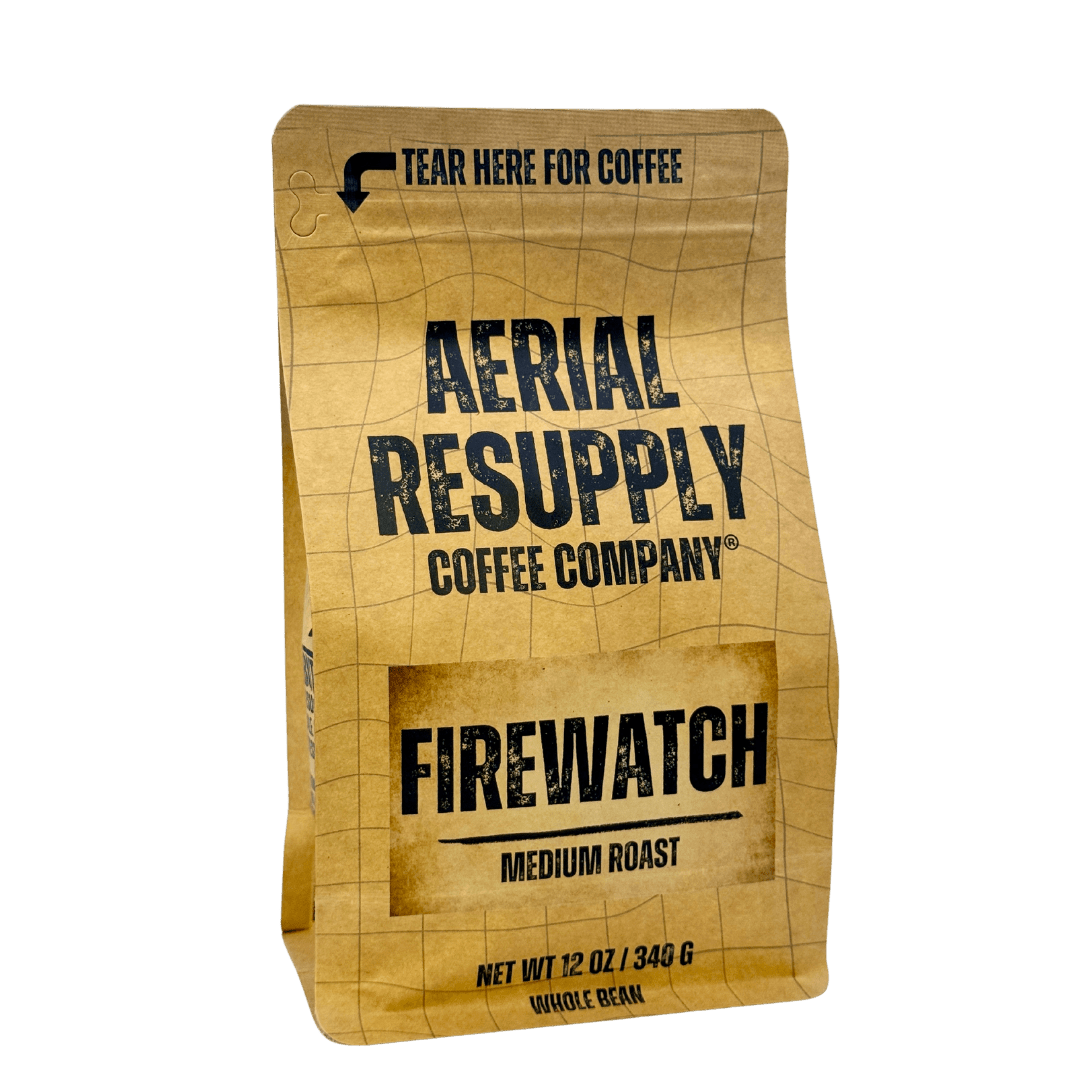
Fire Watch is the Colombian medium roast most people start with, and it works in almost anything you own.
A pour over cone and a stack of filters weighs nothing and turns ground coffee into a real drink.
| Format | Needs | Survives shipping | Verdict |
|---|---|---|---|
| Pods | A pod machine | Very well | Best if a machine exists |
| Pre-ground | Filter, press or improvisation | Very well | Safest general choice |
| Instant | Hot water only | Extremely well | Reliable fallback |
| Whole bean | A grinder | Well | Rarely practical |
| Anything glass | n/a | Poorly | Do not send |
Every day starts with a mission. Most of them are unglamorous.
Anyone who has done the half of a job nobody claps for already knows this. The work that keeps things running is the work nobody sees.
It is true of a campaign and it is true of a Tuesday.
See the lineup →How does shipping affect it?
Military mail commonly takes two to six weeks. Sealed coffee handles that fine, though it will not be at peak freshness on arrival. Pods last longest because each is individually sealed.
Send larger quantities less often. Transit time makes a steady drip impractical.
Write the roast date on the outside if it is not clearly printed.
Nobody plans to run out. They just do not plan not to.
Then it is 6am, the bag is empty, and the day starts a step behind before anything else has gone wrong.
Readiness is not a feeling. It is whether the thing you need is where you need it.
Browse best sellers →What should go with it?
Filters, a sturdy mug, and a brewing method if you are not certain one exists. Coffee with no way to brew it is the single most common care package mistake.
Powdered creamer travels. Liquid creamer does not.
Avoid anything glass, anything that melts, and anything that needs refrigeration.
Preparation beats luck. That is the entire pitch.
You already apply this everywhere else. Coffee is the easiest place to get it right and the one most people leave to chance.
- Pick the roast that suits how you actually brew.
- Set it to resupply on a schedule that matches what you drink.
- Stop thinking about it. You do not hit zero again.
What roast holds up best?
Medium or dark. Conditions are rough and brewing is improvised, so a forgiving roast beats a delicate one. A light roast brewed badly in a mug tastes like a mistake.
Smooth beats bright when the method is a filter balanced over a cup.
Dark roasts also mask hard water better, which matters more than people expect.
Mission beats occupation.
Military, first responder, healthcare, trades, teacher, parent, or just someone with a long list. If you wake up with something to accomplish, this is built for you.
Subscriptions take 30% off the first order automatically. No code, nothing to remember. One time orders take 15% with WELCOME15.
Shop the lineup →Questions people actually ask
Can you mail coffee to an APO address?
Yes. Coffee is not restricted and ships to APO, FPO and DPO addresses at domestic rates. Use a flat rate box and complete the customs form with a plain description.
What coffee is best for deployment?
Whatever matches the available equipment. Pods if there is a machine, ground if there is a filter, instant if there is only hot water. Ground is the safest bet when unsure.
How long does coffee take to arrive downrange?
Commonly two to six weeks. Sealed coffee handles that fine, though it will not be at peak freshness. Pods last longest since each is individually sealed.
What should not go in a coffee care package?
Anything glass, anything that melts, and liquid creamer. Powdered creamer travels well and takes up far less space.
Is instant coffee acceptable downrange?
It is often the only thing that works, and modern instant is considerably better than its reputation. It is a reasonable primary choice, not just a fallback.